
Democracy in times of COVID-19: a time for introspection?
Posted: 8 April, 2020 Filed under: Eduardo Kapapelo | Tags: Angola, basic services, China, COVID-19, democracy, global pandemic, government, health systems, human rights, Hungary, inequality, Institutions, lockdown, massive corruption, militarised society, national lockdowns, pandemic, political system, politics, WHO, World Health Organization Leave a comment Author: Eduardo Kapapelo
Centre for Human Rights, University of Pretoria
My father used to say ‘politics must be conducted in a country which is open, a country which has the space for deliberation and opposing views’. He added that ‘politics must be conducted in a country which is mature’. We find ourselves in challenging times, times in which the openness and maturity of our countries are being tested.
A scale we can use to test the openness and maturity of our institutions is to interrogate (i), the nature our institutions; and (ii) the quality of our institutions. In regards to their nature we can reflect on how they are structured, what they look like on paper, and how they actually function in reality. As regards quality, we can reflect on how institutions respond to stress – how they respond to the demands of the people and whether they are mature enough to understand that when individuals take to the streets in the exercise of their human rights demanding better quality of life, they are not challenging the State, but rather exercise their constitutional right to be heard.
The AU’s initiative on silencing the guns and human rights: the missing link
Posted: 2 April, 2020 Filed under: Ayalew Getachew Assefa | Tags: African Union, AU, AU Constitutive Act, AU Master Roadmap, AUMR, conflict, conflict-free Africa, human rights, human rights violations, peace, peace and security, Peace and Security Council, PSC, silencing the guns, Solemn Declaration Leave a comment Author: Ayalew Getachew Assefa
African Committee of Experts on the Rights and Welfare of the Child
The African Union (AU) has designated its theme for the year 2020 to be on ‘Silencing the Guns: Creating Conducive Conditions for Africa’s Development’. The theme is informed by prior initiative that the Union has established mainly during the occasion of the OAU/AU 50th anniversary, where the Heads of State and Government adopted a Solemn Declaration, in which they expressed their determination to achieve the goal of a conflict-free Africa by ridding, among other things, human rights violations from the continent. Following the commitment expressed through the Solemn Declaration, the Peace and Security Council (PSC), in 2016, developed an AU Master Roadmap of Practical Steps to Silence the Guns in Africa by Year 2020 (AUMR), which eventually was endorsed by the Assembly of Heads of States and Governments (Assembly) in 2017.
The impact of state surveillance and censorship of sexuality on the lives of LGB Ethiopians living in Addis Ababa
Posted: 28 January, 2019 Filed under: Selamawit Tsegaye Lulseged | Tags: Addis Ababa, African Charter, African Charter on Human and Peoples' Rights, censorship, constitution, constitutional ban, Criminal Code, discrimination, eroticism, Ethiopia, FDRE, hegemony, hetero-normative, human rights, ICCPR, ICESCR, imprisonment, International Bill of Rights, LGB, Penal Code, same-sex, same-sex sexual act, sexual minority rights, sexuality Leave a comment Author: Selamawit Tsegaye Lulseged
African Union Human Rights Observers Mission in Burundi (formerly)
Dialogue regarding same-sex sexual act and eroticism is a recent phenomenon in Ethiopia. As is true for most African countries, in Ethiopia, there is a strong heterosexual culture that bases its legitimacy on the hegemony of masculinity. The social construction is based on the values of family that depends on traditional gender role and religious dogmas. In many discourses, lesbian, gay and bisexual (LGB) individuals are mentioned in relation to pedophilia, mental sickness and people who chose deviant sexual behavior. Thus, same-sex sexuality is not only something that is pushed under the rug, but also subjected to state scrutiny and embargo.
Freedom of expression: Hopes, anxieties and skepticism in Liberia’s nascent democracy
Posted: 2 August, 2018 Filed under: Urias Teh Pour | Tags: constitution, Criminal Libel laws, decriminalise free speech, ECOWAS Treaty, free speech, freedom of expression, Freedom of Information Act, George Manneh Weah, human rights, ICCPR, Konate v. Burkina Faso, Liberia, Liberian Football legend, Ministry of Information, New York Times Co. v. Sullivan, newly elected Governmen, Penal Law, Table Mountain Declaration, UN Human Rights Committee 3 Comments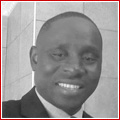 Author: Urias Teh Pour
Legal Advisor on the Liberia Law Society Land Rights and Freedom of Expression Projects
The recent move to repeal Liberia’s Criminal Libel laws by the newly elected Government of former Liberian Football legend, George Manneh Weah, has been hailed by human rights groups as a positive step in the right direction. The effort to decriminalise section 11.11 of the Penal Law comes barely two months following the visit of the United Nations Special Rapporteur on Freedom of Expression to Liberia. The UN Officials called on the Government of Liberia to review all laws that undermine free speech, as guaranteed by article 19 of the International Covenant on Civil and Political Rights (ICCPR) and other instruments ratified by Liberia.
Stop the human rights violations in the South-west and North-west regions of Cameroon now: A call on all relevant stakeholders
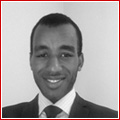
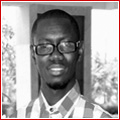
Posted: 3 July, 2018 Filed under: Basiru Bah, Essa Njie, Theophilus Odaudu, Urerimam Raymond Shamaki | Tags: African Charter on Human and Peoples' Rights, Anglophone regions, arbitrary arrest, Cameroon, death in custody, detention, human rights, protests, torture, use of force, violations Leave a commentAuthors: Basiru Bah, Essa Njie, Theophilus Michael Odaudu and Urerimam Raymond Shamaki on behalf of the 2018 class of the Master’s Programme in Human Rights and Democratisation in Africa (Centre for Human Rights, University of Pretoria)
 |
 |
 |
 |
| Basiru Bah | Essa Njie | Theophilus Odaudu | Urerimam Raymond Shamaki |
For the Centre for Human Rights latest press release on the human rights violations in Cameroon, please visit www.chr.up.ac.za/StopCameroonViolations
Since 2016, the human rights situation in the Anglophone regions of Cameroon has been deteriorating. It all started with peaceful protests organised by lawyers, teachers and students in the region demanding the appointment of Anglophone Cameroonians to key positions in the judiciary, civil service and educational institutions. The state responded with brutal force killing at least 10 people and injuring hundreds. This crack down increased agitation in the region and further calls for reform and even secession. The government militarised the area and conducted series of operations against protesters killing even more people. Amnesty International has reported arson attacks, torture, incommunicado detentions, arbitrary and extra-judicial executions, murder and other inhumane acts against civilians. These atrocities are committed by both the Cameroon security forces and armed separatist movements. The end of 2017 to date has seen more than 150,000 people being internally displaced and over 20,000 fleeing to neighbouring Nigeria in the wake of increased violence in the region. Cameroon is edging closer to civil war every day as the world watches in silence.
The status of the rights of persons with disabilities in Sierra Leone: The need for a paradigm shift from political lip service
Posted: 6 June, 2018 Filed under: Joel Tejan Deen-Tarawally Esq. | Tags: begging, Convention on the Rights of Persons with Disabilities, CRPD, democratic dispensation, Excellency Brigadier (Rtd) Julius Maada Bio, hearing and speech impaired, human rights, mentally impaired, National Social Protection Strategy, persons with disabilities, physically impaired, political lip-service, Poverty Reduction Interventions, Sierra Leone, social paradigm, visually impaired Leave a comment Author: Joel Tejan Deen-Tarawally Esq.
Human Rights Lawyer, Sierra Leone Legal Aid Board
(An earlier version of this article was published in the Sierra Leonean newspaper Concord Times on 3 May 2018)
Whenever one speaks of persons with disabilities (such as the visually impaired, the hearing and speech impaired, the mentally and physically impaired) in Sierra Leone the next thing that comes to mind is an idea of destitute Sierra Leoneans begging in the streets of Freetown and other areas in the provinces. Such a national image regarding persons with disabilities is clearly not in line with Sierra Leone’s legal obligation under national and international laws.
Building alliances between IDAHOT and MaputoProtocol@15 for womxn
Posted: 18 May, 2018 Filed under: David Ikpo | Tags: African Societies, Bruce Jenner, Caitlyn Jenner, Chimamanda Ngozi Adichie, homophobic inhumanity, human rights, human rights violations, IDAHOT, international Day Against Homophobia Transphobia and Biphobia, LGBTI, Maputo Protocol, MaputoProtocol@15, May 17, sexual orientations, Womxn Leave a comment Author: David Ikpo
Nigerian lawyer and storyteller with a Master of Laws in Human Rights and Democratisation in Africa
IDAHOT: The international Day Against Homophobia Transphobia and Biphobia
Maputo Protocol: Protocol to the African Charter on Human and Peoples’ Rights on the Rights of Women in Africa
Womxn: No set definition. This term, as used in this piece, refers to a broad still unraveling category of persons of female gender who voluntary identify, live, express their gender crossing stereotypical roles and standards, embracing her several cross-cutting circumstances and layers of identity, recognizing the humanity and diversity in her community, operating, demanding, believing in and working towards the substantive equality(equity) of all sexes and genders and against the repressive confines of the poisonous glorification of masculinity at the expense of the human rights of persons of female gender in all spaces. A feminist.
Violence against women and girls in Africa: A global concern to ponder on International Women’s Day and beyond
Posted: 8 March, 2018 Filed under: Kennedy Kariseb | Tags: Africa, conflict, education, empowerment, feminism, girls, human rights, international human rights, international law, International Women's Day, IWD, IWD2018, pandemic, sexual violence, SRVAW, treaty, UN, United Nations, VAW, violence, violence against women, women, women's human rights, women's rights, women's rights movement 2 Comments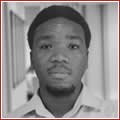 Author: Kennedy Kariseb
Doctoral candidate, Centre for Human Rights, Faculty of Law, University of Pretoria
It has been four decades since the United Nations (UN) observed for the first time International Women’s Day (IWD) on 8 March 1975. Although there are traces of celebration of this day, dating as far back as 1909, its formal initiation came in the wake of the first World Conference of the International Women’s Year that took place in Mexico City, Mexico. Its object, as aptly argued by Temma Kaplan, is to mark ‘the occasion for a new sense of female consciousness and a new sense of feminist internationalism’.[i]
In a sense, 8 March is meant to be a day of both celebration and reflection for women the world over: a celebration of the gains made in enhancing women’s rights and the overall status of women globally, while reflecting and strategising on the voids and shortcomings still persistent in the women’s rights discourse. The occasion of the forty-third celebration of the IWD clearly marks an opportunity for feminist introspection on the broader question of violence against Women (VAW) and its regulation under international law. This is because while VAW is not the only form of human rights abuse women suffer, it is one in which the gendered aspect of such abuse is often the most clear and pervasive.
The unclear relation between Angola and its Muslim citizens and migrants: Is Angola discriminating against them?
Posted: 6 October, 2017 Filed under: Cristiano d'Orsi | Tags: Angola, Angolan Constitution, Angolan Muslims, discrimination, freedom of religion, human rights, illegal immigration, ISIS, Islamic, Islamic Community of Angola, Islamic State terror group, John Locke, Law on Religion, Manuel Fernando, religion, Rosa Cruz da Silva 2 Comments Author: Cristiano d’Orsi
Research Fellow and Lecturer at the South African Research Chair in International Law (SARCIL), University of Johannesburg
Angola is a country where the traditional Islamic relation between Muhajirun (‘immigrants’) and Ansar (‘helpers’: locals)[1] seems not to find a fertile ground. Islam in Angola represents a minority religion, with an estimate number of proselytes amounting to approximately 1%[2] of the entire population.[3] These are mostly Sunnis who arrived in Angola from West Africa,[4] Somalia[5] and from families of Lebanese descent[6] following the end of the Angolan Civil War in 2002.
Historically, as many of these immigrants entered Angola illegally, which created the misperception of associating Islam with illegal immigration and crime (almost predominantly counterfeiting of money and money laundering), although barely any evidence of this has been proved.[7] This was affirmed by the UN Special Rapporteur on Freedom of Religion or Belief on her visit to the country in 2007.[8]
94 mental health patients in Gauteng: A lesson for State parties to the CRPD – A classic case of a poor deinstitutionalisation process
Posted: 28 March, 2017 Filed under: Patricia Mwanyisa | Tags: 94 mental health patients, adequate standards of living including adequate food, Centre for Human Rights, clothing and housing, Convention on the Rights of Persons with Disabilities, CRPD, deinstitutionalisation, disability rights, freedom from torture or cruel, Gauteng, Health Ombud, human rights, human rights-based approach, ICESCR, inhumane or degrading treatment, mental disability, Mental Health Care Act, NGO, provincial government, psychosocial, right to highest attainable health, right to independent living and inclusion in society, right to life, South Africa Leave a comment Author: Patricia Mwanyisa
Consultant – Human Rights and Access to Justice
As South Africa took time to celebrate its annual human rights day on March 21, this year (2017) the deaths of the 94 patients in Gauteng Province in a space of under a year should not be forgotten. The provincial government of Gauteng took the decision to remove persons with psychosocial and intellectual disabilities from government health institutions to reduce spending on their healthcare. The implementation process was poorly planned, rapidly executed and chaotic. The move had fatal and disastrous consequences as it not only contravened national and international law, but also proved cruel and inhumane. The record shows 94 lives were lost, families have been severely traumatised and a healthcare support system regardless of whether it was the most ideal or not was shaken to its knees.
Apart from violating domestic law – the National Health Act 61 (2003) and the Mental Health Care Act 17 (2002)) – as a State party to the UN Convention on the Rights of Persons with Disabilities (CRPD) and the International Covenant on Economic, Social and Cultural Rights (ICESCR), among other international instruments, there are several frameworks that were contravened by South Africa. This case provides an opportunity for some serious learning for South Africa (SA) as well as other African States. Learning from previous mistakes is vital for progress. Focus should be directed on how to avoid making similar mistakes in the future. It is probably more important to provide guidance to State parties or governments when they have made mistakes as opposed to the naming and shaming – particularly after the fact. To be productive, however requires the state or those in power to accept responsibility, acknowledge their mistakes and be receptive to the guidance. Ultimately, objectively and substantively unpacking the critical aspects or points at which things went wrong in the Gauteng saga from an international human rights perspective would be beneficial for the planning and implementation of these types of projects or programmes in the future.

