
Where is democracy? Reflections on the ascendancy of Mnangagwa as president of Zimbabwe
Posted: 27 November, 2017 Filed under: Charles Ngwena | Tags: Ayi Kwei Armah, constitution, coup, democracy, dictatorship, elections, Emmerson Mnangagwa, ethnic cleansing, Gukurahundi, Matebeleland, military, military intervention, national army, political change, Robert Mugabe, white minority rule, ZANU-PF, Zimbabwe, Zimbabwe Defence Force 3 Comments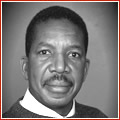 Author: Charles Ngwena
Professor of Law, Centre for Human Rights, University of Pretoria
What seemed unimaginable has happened. After an uninterrupted ‘reign’ of 37 years, Robert Mugabe, the de facto emperor of Zimbabwe, has ‘resigned’ from office. There has been genuine jubilation not least among those who have been at the receiving end of Mugabe’s increasingly despotic, corrupt and dysfunctional governance – the majority of Zimbabweans. Emmerson Mnangagwa has taken office as Mugabe’s successor. It is a historic moment. Since attaining independence in 1980, Zimbabweans have only known Mugabe as their political supremo – initially as prime minister and latterly as president. The fact of Mugabe’s departure from office, alone, has raised hopes that we might be at the cusp of a compassionate, fairer, humane and democratic Second Republic. At the same time, the clouds are pregnant with contradictions, counselling us not to throw caution aside even as we pine for change. Why is this?
The African Court: Need for a system-based approach to jurisprudential affirmation
Posted: 16 November, 2017 Filed under: Sègnonna Horace Adjolohoun | Tags: advisory matters, African Commission on Human and Peoples’ Rights, African Court, African Court on Human and Peoples’ Rights, ‘introspective’ jurisprudence, criticised, Inoperative Advisory Mandate, international human rights law, Memorandum of Understanding, Observer Status, raison d’être, Remedial powers, system, unconstitutional 5 Comments Author: Sègnonna Horace Adjolohoun
Visiting Professor of international human rights law and comparative African constitutional law, Central European University;
Extraordinary Lecturer, Centre for Human Rights, University of Pretoria
Principal Legal Officer, African Court on Human and Peoples’ Rights
This article is a summarised version of a much longer commentary which shall be published subsequently.
The views expressed below are exclusively those of the author and not of the African Court.
THE IMPERATIVE OF SYSTEM-BASED LAW MAKING
When the African Court became operational in 2006, the expectation was that it will affirm the then widely criticised African Commission on Human and Peoples’ Rights rather than merely “judicialise” the system. The Court therefore bears the historical duty to adopt a system strengthening approach to judicial law-making. As it makes law over the years, it becomes paramount to vet the Court’s pronouncements against that raison d’être. I attempt to do so with respect to its recent decisions.
ADVISORY MATTERS
Substantively, the requests related to a varied range of matters that are both current and novel, ranging from the meaning and scope of the role of the African Union policy organs to ‘consider’ the Activity Report of the African Human Rights Commission to the modalities of litigating the crime of unconstitutional change of government. Unfortunately, the Court did not assert jurisdiction to pronounce itself on the merit of those issues.
Recalibrating Nigeria’s Whistleblowing Policy: An urgent plea for a comprehensive whistleblower protection legislation
Posted: 18 October, 2017 Filed under: Olabisi Delebayo Akinkugbe | Tags: immoral practices, NACS, National Anti-Corruption Strategy, Nigeria, Nigerian government, socio-political factors, transparency, whistleblower protection, whistleblowers 1 Comment Author: Olabisi D Akinkugbe
PhD candidate at the University of Ottawa, Canada
This short essay draws attention to the current gap in regulatory framework for the protection of whistleblowers in Nigeria and its potential to derail any meaningful sustained and long-term success of the country’s nascent whistleblower program. The other socio-political factors that would contribute to the effectiveness of the program in Nigeria are discussed in a forthcoming article by the author.
Whistleblowing refers to the public interest disclosure of information by members of an organization or government employees about illegal and immoral practices by other employees or other persons who deal with the organization, such as contractors, in the case of public governance. Employees are often the first to recognize malpractice, fraud, dishonest and illegal activity, or other wrongdoing with potential impact on the public interest. As a public governance integrity enhancing mechanism, it is primarily linked to encouraging and enhancing the public disclosure of wrongdoing in order to improve accountability and transparency.
The unclear relation between Angola and its Muslim citizens and migrants: Is Angola discriminating against them?
Posted: 6 October, 2017 Filed under: Cristiano d'Orsi | Tags: Angola, Angolan Constitution, Angolan Muslims, discrimination, freedom of religion, human rights, illegal immigration, ISIS, Islamic, Islamic Community of Angola, Islamic State terror group, John Locke, Law on Religion, Manuel Fernando, religion, Rosa Cruz da Silva 2 Comments Author: Cristiano d’Orsi
Research Fellow and Lecturer at the South African Research Chair in International Law (SARCIL), University of Johannesburg
Angola is a country where the traditional Islamic relation between Muhajirun (‘immigrants’) and Ansar (‘helpers’: locals)[1] seems not to find a fertile ground. Islam in Angola represents a minority religion, with an estimate number of proselytes amounting to approximately 1%[2] of the entire population.[3] These are mostly Sunnis who arrived in Angola from West Africa,[4] Somalia[5] and from families of Lebanese descent[6] following the end of the Angolan Civil War in 2002.
Historically, as many of these immigrants entered Angola illegally, which created the misperception of associating Islam with illegal immigration and crime (almost predominantly counterfeiting of money and money laundering), although barely any evidence of this has been proved.[7] This was affirmed by the UN Special Rapporteur on Freedom of Religion or Belief on her visit to the country in 2007.[8]
Kidnappings in Nigeria as a class act: Implications for the criminal justice system
Posted: 18 September, 2017 Filed under: Akinola Akintayo | Tags: abductors, ‘Evans’, Chukwudubem George Onwuamadike, class act, criminal justice system, inequality, kidnapping, Nigeria, personal enrichment, ransom, targeting of the rich 3 Comments Author: Dr Akinola Akintayo
Lecturer and researcher in the Department of Public Law, Faculty of Law, University of Lagos, Nigeria
Nigeria is a country steeped in inequality. Reports indicate that a minimum of 86 of the 140 or so million Nigerians live in extreme poverty. The country’s richest individuals are also said to earn 8,000 times each day what their poor counterparts spends on basic necessaries in a year. To further underscore the severe level of inequality, studies also indicate that the combined wealth of the top five richest Nigerians can end extreme poverty in the country. That is how bad the income and wealth gap in Nigeria is.
However, this kind of inequality underpinned by exploitative and oppressive capitalist mode of production tends to weaken what some scholars have referred to as the ‘social instinct’ and breeds discontent, opposition and conflicts between society’s classes. In this kind of clime, the less privileged and deprived members of the society may well feel entitled, either within or without the law, to demand what they considered their own fair share of the commonwealth from the more opulent part of the society. The main purpose of this short piece is to interrogate emerging evidence which suggests that recent dimensions of kidnappings in Nigeria is a class act where the deprived class may be demanding what they perceived as their fair share from the more opulent class and examine the omens that this bids for the criminal justice system.
Double trouble: Consulting for a fair retrenchment
Posted: 3 April, 2017 Filed under: Rochelle le Roux | Tags: bumping, case law, consultation, employee, employer, employment, fairness, labour law, legislation, legislative developments, operation requirements, procedural, retrenchment, retrenchment law, Sputh Africa, substantive, unemployment, unfiar dismissal Leave a comment Author: Prof Rochelle le Roux
Director of the Institute of Development and Labour Law; Professor in the Faculty of Law, University of Cape Town (UCT)
Most employers and employees have a broad understanding that the fairness of a dismissal rests on both a substantive and a procedural leg.
On the one hand, substantive unfairness, in broad strokes, suggests that an employee who should not have been dismissed, had been dismissed.
The legislature had chosen to express substantive fairness with reference to the employee’s misconduct or incapacity and the operational requirements of the employer. A dismissal for the latter reason is often referred to as retrenchment.
On the other hand, procedural unfairness implies that the employee had not been given an opportunity to be heard by the employer before the dismissal was affected. There is at least one practical reason for distinguishing between procedural and substantive fairness: when a dismissal is unfair only because the employer did not follow a fair procedure, the competent remedy is generally only payment of compensation and not reinstatement as would be the case when the dismissal is either substantively, or both substantively and procedurally, unfair.
94 mental health patients in Gauteng: A lesson for State parties to the CRPD – A classic case of a poor deinstitutionalisation process
Posted: 28 March, 2017 Filed under: Patricia Mwanyisa | Tags: 94 mental health patients, adequate standards of living including adequate food, Centre for Human Rights, clothing and housing, Convention on the Rights of Persons with Disabilities, CRPD, deinstitutionalisation, disability rights, freedom from torture or cruel, Gauteng, Health Ombud, human rights, human rights-based approach, ICESCR, inhumane or degrading treatment, mental disability, Mental Health Care Act, NGO, provincial government, psychosocial, right to highest attainable health, right to independent living and inclusion in society, right to life, South Africa Leave a comment Author: Patricia Mwanyisa
Consultant – Human Rights and Access to Justice
As South Africa took time to celebrate its annual human rights day on March 21, this year (2017) the deaths of the 94 patients in Gauteng Province in a space of under a year should not be forgotten. The provincial government of Gauteng took the decision to remove persons with psychosocial and intellectual disabilities from government health institutions to reduce spending on their healthcare. The implementation process was poorly planned, rapidly executed and chaotic. The move had fatal and disastrous consequences as it not only contravened national and international law, but also proved cruel and inhumane. The record shows 94 lives were lost, families have been severely traumatised and a healthcare support system regardless of whether it was the most ideal or not was shaken to its knees.
Apart from violating domestic law – the National Health Act 61 (2003) and the Mental Health Care Act 17 (2002)) – as a State party to the UN Convention on the Rights of Persons with Disabilities (CRPD) and the International Covenant on Economic, Social and Cultural Rights (ICESCR), among other international instruments, there are several frameworks that were contravened by South Africa. This case provides an opportunity for some serious learning for South Africa (SA) as well as other African States. Learning from previous mistakes is vital for progress. Focus should be directed on how to avoid making similar mistakes in the future. It is probably more important to provide guidance to State parties or governments when they have made mistakes as opposed to the naming and shaming – particularly after the fact. To be productive, however requires the state or those in power to accept responsibility, acknowledge their mistakes and be receptive to the guidance. Ultimately, objectively and substantively unpacking the critical aspects or points at which things went wrong in the Gauteng saga from an international human rights perspective would be beneficial for the planning and implementation of these types of projects or programmes in the future.
Stripped of Dignity: The Struggle for LGBT Rights in Tanzania
Posted: 17 March, 2017 Filed under: Daniel Marari | Tags: consensual sex, constitution, discrimination, equality, gender identity, hate crimes, HIV/Aids, homosexuality, imprisonment, LGBT, LGBTI, Penal Code, prosecution, sexual minorities, Sexual Offences Special Provisions Act, sexual orientation, Tanzania, unnatural offence, violence 7 Comments Author: Daniel Marari
LLM, International Human Rights Law, Lund University, Sweden
Although the Tanzanian Constitution (1977) guarantees the right to equality and prohibits discrimination based on gender and sex, lesbian, gay, bisexual and transgender (LGBT) people still face deeply rooted hostility, prejudice and widespread discrimination in the Tanzanian society. Threats of criminal penalty, social exclusion, harassment and violence make it particularly unsafe for one to come out as an LGBT person.
At present, certain homosexual acts between consenting adult males are criminalized under the Penal Code (Chapter 16 of the laws). Under section 154 of the Penal Code, committing or attempting to commit “unnatural offences” are crimes punishable with a maximum sentence of life imprisonment and twenty years’ imprisonment, respectively. “Unnatural offence” is defined as (1) sexual intercourse with any person “against the order of nature” as well as (2) consensual sexual intercourse between a man and man or woman “against the order of nature”. The words “against the order of nature” are not statutorily defined. Also, under section 157 of the Penal Code, it is an offence punishable with a maximum of five years imprisonment for any male person, whether in public or private, to commit an act of gross indecency with another male person. By section 3 of the Sexual Offences Special Provisions Act, “gross indecency” is defined as “any sexual act that is more than ordinary but falls short of actual intercourse and may include masturbation and indecent physical contact or indecent behavior without any physical contact”. Consent is no defense to any of these offences and no distinction regarding age is made in the text of the law. As the consequence of the existence of these laws criminalizing private consensual homosexual acts, LGBT people in Tanzania live in psychological stress and unceasing fear of prosecution and imprisonment.
Read the rest of this entry »
South Africa’s intention to withdraw from the Rome Statute of the International Criminal Court: Time to seriously consider an African alternative?
Posted: 28 October, 2016 Filed under: Owiso Owiso | Tags: Africa, African Charter, African Charter of Human and Peoples’ Rights, African Court of Justice and Human Rights, African Union, AU, Election and Governance, frican Charter on Democracy, human rights, ICC, impunity, International Criminal Court, International Criminal law, justice, Kenya, Malabo Protocol, Omar Al-Bashir, Rome Statute, South Africa, Sudan, Uhuru Kenyatta, United Nations, United Nations Security Council, William Ruto 1 Comment Author: Owiso Owiso
LLB – Nairobi, PGD Law – KSL
While the decision by South Africa to commence the formal process of withdrawing from the Rome Statute of the International Criminal Court is shocking, honest observers will admit it was not entirely unforeseen. African countries through the African Union (AU) have long voiced misgivings about the International Criminal Court (ICC) and it was just a matter of time before the usually slow-moving AU clock started ticking. The AU had earlier this year urged its members to consider withdrawing from the Rome Statute.[1] This was triggered by the refusal by the United Nations Security Council and the ICC to accede to the AU’s requests for suspension or termination of the cases against Sudan’s president Omar al-Bashir and his Kenyan counterpart Uhuru Kenyatta and his deputy William Ruto.
While South Africa’s decision should be condemned, nothing much is likely to come of such condemnation. Treaties are a product of state consent[2] and it follows that withdrawal is equally a unilateral act of the state.[3] Even if an argument could be advanced against such unilateralism, the process is still a political one which rests almost entirely with the political class, at least in imperfect democracies. South Africa’s move is likely to embolden other African countries to commence similar processes. South Africa is Africa’s biggest economy and the AU’s largest member contributor. It is also arguably one of Africa’s better-off imperfect democracies. For these reasons, it is often the case in continental affairs that other African countries hold on to their cards until South Africa plays after which they emerge from their cocoons and play theirs in more or less similar fashion. With the possible exception of ‘righteous’ Botswana and perhaps Mauritius that considers itself African only when the situation suits it, the possibility that other African countries will follow South Africa’s lead on the ICC cannot be ruled out. In light of such possibility, how then does Africa assure its citizens that the fight against impunity as is entrenched in its founding instrument[4] is still top of its agenda, if at all it ever was?
Rethinking the North-South divide in international criminal justice: Reflections from an African viewpoint
Posted: 25 October, 2016 Filed under: Francis Dusabe | Tags: accountability, Africa, African Court on Human and Peoples’ Rights, African Union, AU, collaboration, courts, Hissène Habré, ICC, International Criminal Court, international criminal justice, International Criminal law, law, regional mechanisms, Rome Statute 2 Comments Author: Francis Dusabe
Legal Researcher
‘Whatever you do for me but without me, you do against me’– Mahatma Gandhi, 1869-1948
More than ever before, Africa is at both sides of the coin; it is the subject of international criminal law because African states have steadfastly stood for the creation of the International Criminal Court and an object of international criminal law because of the unfortunate participation of Africans in atrocities that ravages their continent.
Unlike what many think, Africa has a lot to offer in the development of international criminal law, be it at domestic, regional and international level. Domestically, Africa leads other continents in the nationalisation of international criminal law either through domestication of the Rome Statute or the incorporation of main principles of international criminal law as enshrined in major conventions and treaties in national law.

