
The outlaws in Malawi: The travails of sexual minorities in a Southern African country
Posted: 10 July, 2018 Filed under: Urerimam Raymond Shamaki | Tags: criminalize, discrimination, homosexuality, ICCPR, intersex, LGBTI, Malawi, Penal Code, sex reassignment surgery, sexual minorities, transgender, transsexual 1 Comment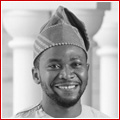 Author: Urerimam Raymond Shamaki
Barrister and solicitor of the Supreme Court of Nigeria; LLM (Human Rights and Democratisation in Africa) Candidate
Introduction
Homosexuality is still considered a crime in many countries of the world. Malawi is one of the 33 countries in Africa and 72 in the world that still criminalises homosexuality. Although there is no direct law prohibiting homosexuality in Malawi such as is the case in countries like Nigeria with the Same-Sex Prohibition Act 2015, there are still provisions of some laws indirectly affecting homosexual activities in Malawi. This article briefly reviews some of the provisions of these laws and how they impact on the rights of sexual minorities in Malawi.
Stop the human rights violations in the South-west and North-west regions of Cameroon now: A call on all relevant stakeholders
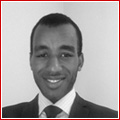
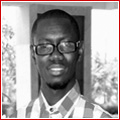
Posted: 3 July, 2018 Filed under: Basiru Bah, Essa Njie, Theophilus Odaudu, Urerimam Raymond Shamaki | Tags: African Charter on Human and Peoples' Rights, Anglophone regions, arbitrary arrest, Cameroon, death in custody, detention, human rights, protests, torture, use of force, violations Leave a commentAuthors: Basiru Bah, Essa Njie, Theophilus Michael Odaudu and Urerimam Raymond Shamaki on behalf of the 2018 class of the Master’s Programme in Human Rights and Democratisation in Africa (Centre for Human Rights, University of Pretoria)
 |
 |
 |
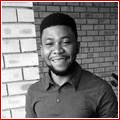 |
| Basiru Bah | Essa Njie | Theophilus Odaudu | Urerimam Raymond Shamaki |
For the Centre for Human Rights latest press release on the human rights violations in Cameroon, please visit www.chr.up.ac.za/StopCameroonViolations
Since 2016, the human rights situation in the Anglophone regions of Cameroon has been deteriorating. It all started with peaceful protests organised by lawyers, teachers and students in the region demanding the appointment of Anglophone Cameroonians to key positions in the judiciary, civil service and educational institutions. The state responded with brutal force killing at least 10 people and injuring hundreds. This crack down increased agitation in the region and further calls for reform and even secession. The government militarised the area and conducted series of operations against protesters killing even more people. Amnesty International has reported arson attacks, torture, incommunicado detentions, arbitrary and extra-judicial executions, murder and other inhumane acts against civilians. These atrocities are committed by both the Cameroon security forces and armed separatist movements. The end of 2017 to date has seen more than 150,000 people being internally displaced and over 20,000 fleeing to neighbouring Nigeria in the wake of increased violence in the region. Cameroon is edging closer to civil war every day as the world watches in silence.
The status of the rights of persons with disabilities in Sierra Leone: The need for a paradigm shift from political lip service
Posted: 6 June, 2018 Filed under: Joel Tejan Deen-Tarawally Esq. | Tags: begging, Convention on the Rights of Persons with Disabilities, CRPD, democratic dispensation, Excellency Brigadier (Rtd) Julius Maada Bio, hearing and speech impaired, human rights, mentally impaired, National Social Protection Strategy, persons with disabilities, physically impaired, political lip-service, Poverty Reduction Interventions, Sierra Leone, social paradigm, visually impaired Leave a comment Author: Joel Tejan Deen-Tarawally Esq.
Human Rights Lawyer, Sierra Leone Legal Aid Board
(An earlier version of this article was published in the Sierra Leonean newspaper Concord Times on 3 May 2018)
Whenever one speaks of persons with disabilities (such as the visually impaired, the hearing and speech impaired, the mentally and physically impaired) in Sierra Leone the next thing that comes to mind is an idea of destitute Sierra Leoneans begging in the streets of Freetown and other areas in the provinces. Such a national image regarding persons with disabilities is clearly not in line with Sierra Leone’s legal obligation under national and international laws.
Promoting and protecting children’s rights in Africa: Case of the Talibés of Senegal.
Posted: 31 May, 2018 Filed under: Henrietta Ekefre, Jonathan Obwogi, Samuel Ade Ndasi, Susan Mutambasere | Tags: ACERWC, African Charter on the Rights and Welfare of the Child, children's rights, daaras, financial targets, forced child begging, la Rencontre Africaine pour la Defense des Droits de l’Homme, RADDHO, religious schools, Senegal, street begging, Talibés 1 CommentAuthors: Coordinator and members of the Implementation Clinic of the Centre for Human Rights
 |
 |
 |
 |
| Henrietta Ekefre | Samuel Ade Ndasi | Susan Mutambasere | Jonathan Obwogi |
In 2012, the Centre for Human Rights, University of Pretoria, together with La Rencontre Africaine pour la Defense des Droits de l’Homme (RADDHO), an NGO in Senegal, submitted a case to the African Committee of Experts on the Rights and Welfare of the Child (ACERWC). The case concerned children forced into street begging in Senegal.
Since the 1980s, Senegal has had a challenge with access to primary education, which leaves thousands of children unable to get absorbed in the mainstream schools. Further, religion plays an important role in the upbringing of children. These have contributed to a situation where at least 100 000 children are enrolled in daaras (religious schools) often far away from their parents. The daaras are administered by marabouts who are religious leaders and not trained educators. These children who are called talibés live in deplorable and overcrowded conditions where they are subjected to various forms of abuse. The marabouts exploit the talibés by making them beg on the streets. In some instances, children are given financial targets to reach, failure of which results in punishment. There is no provision of medical care should the talibés fall sick as they essentially have to fend for themselves.
Why we need both words and actions to help Africa’s children
Posted: 23 May, 2018 Filed under: Assefa Bequele | Tags: access to justice, African Governments, African Union, Call to Action, children, children suffering, children's rights, civil society organisations, Continental Conference on Access to Justice for Children, informal justice system, NGOs, prison, UN agencies, UN Global Study Leave a comment Author: Dr Assefa Bequele
Executive Director, Africa Child Policy Forum (ACPF)
We’re often told that actions speak louder than words, and it’s true we won’t change lives by simply talking about the problems. But I also think that you can’t make a real impact unless you’ve thoroughly debated and agreed what needs to be done. Words first, then actions.
I was reminded of this at the Continental Conference on Access to Justice for Children, held recently in the Ethiopian capital Addis Ababa. More than two hundred child rights experts, politicians, lawyers and civil society activists came together to try and find a way forward for the thousands of children across Africa who are denied access to justice. It’s easy for the cynics to dismiss such conferences as talking shops – fine words and discussions, but little in the way of concrete action. And if we had simply presented and debated the issues, there could have been some truth in that
Building alliances between IDAHOT and MaputoProtocol@15 for womxn
Posted: 18 May, 2018 Filed under: David Ikpo | Tags: African Societies, Bruce Jenner, Caitlyn Jenner, Chimamanda Ngozi Adichie, homophobic inhumanity, human rights, human rights violations, IDAHOT, international Day Against Homophobia Transphobia and Biphobia, LGBTI, Maputo Protocol, MaputoProtocol@15, May 17, sexual orientations, Womxn Leave a comment Author: David Ikpo
Nigerian lawyer and storyteller with a Master of Laws in Human Rights and Democratisation in Africa
IDAHOT: The international Day Against Homophobia Transphobia and Biphobia
Maputo Protocol: Protocol to the African Charter on Human and Peoples’ Rights on the Rights of Women in Africa
Womxn: No set definition. This term, as used in this piece, refers to a broad still unraveling category of persons of female gender who voluntary identify, live, express their gender crossing stereotypical roles and standards, embracing her several cross-cutting circumstances and layers of identity, recognizing the humanity and diversity in her community, operating, demanding, believing in and working towards the substantive equality(equity) of all sexes and genders and against the repressive confines of the poisonous glorification of masculinity at the expense of the human rights of persons of female gender in all spaces. A feminist.
Victimised twice: Wartime rape in South Sudan is a women’s rights violation
Posted: 14 May, 2018 Filed under: Dunia Mekonnen Tegegn | Tags: armed conflict, CEDAW, Convention on the Elimination of Discrimination against Women, gender-based discrimination, Geneva Conventions, harmful traditional practices, Maputo Protocol, rape, religious dogmas, sex stereotypes, sexual slavery, sexual violence, social prejudice, South Sudan, war, war crimes, women empowerment, women's rights 2 Comments Author: Dunia Mekonnen Tegegn
Human rights lawyer, Ethiopia
In December 2013, South Sudan was plunged into a massive scale of violence because of the outbreak of conflict between the Sudan Liberation Army and the Sudan People Liberation Movement. The fight took an ethnic turn as soldiers from the country’s largest groups, the Dinka, and Nuer, divided their loyalties to either President Kiir or his deposed vice, Mr Machar respectively. While some civilians were caught in the cross fire, others were deliberately targeted along ethnic lines. Women are the immediate victims of this conflict because of rampant sexual abuse perpetrated against them.
The unspoken: Unsafe abortion in The Gambia and the necessity for legal reform
Posted: 13 March, 2018 Filed under: Satang Nabaneh | Tags: back street abortions, family planning, Gambia, health care, illegal abortion, medical cost, Penal Code, religious traditions, restrictive abortion laws, The Gambia Family Planning Association, unsafe abortion, unwanted pregnancy, Women’s Act, women’s sexual and reproductive rights 2 Comments Author: Satang Nabaneh
Project Officer, Women Rights Unit, Centre for Human Rights, University of Pretoria
In the Gambian context, the right of women to an informed choice and access to family planning and appropriate health-care service remains contentious due to the socio-cultural and religions dimensions. Being a society where deep-seated traditions and the Islamic religion play a major part in the life of a person and society, issues of sexuality and procreation are generally interpreted accordingly.
The Gambia has one of the most restrictive abortion laws in Africa, which criminalises abortion based on colonially inherited penal code (Criminal Code, Act no. 25 of 1933). The Criminal Code follows the abortion law as provided in the English Offences against the Person Act of 1861 and subsequent interpretation by the Courts such as in the 1938 case of R v Bourne (3 ALL ER 615, [1939] 1 KB 687).
Violence against women and girls in Africa: A global concern to ponder on International Women’s Day and beyond
Posted: 8 March, 2018 Filed under: Kennedy Kariseb | Tags: Africa, conflict, education, empowerment, feminism, girls, human rights, international human rights, international law, International Women's Day, IWD, IWD2018, pandemic, sexual violence, SRVAW, treaty, UN, United Nations, VAW, violence, violence against women, women, women's human rights, women's rights, women's rights movement 2 Comments Author: Kennedy Kariseb
Doctoral candidate, Centre for Human Rights, Faculty of Law, University of Pretoria
It has been four decades since the United Nations (UN) observed for the first time International Women’s Day (IWD) on 8 March 1975. Although there are traces of celebration of this day, dating as far back as 1909, its formal initiation came in the wake of the first World Conference of the International Women’s Year that took place in Mexico City, Mexico. Its object, as aptly argued by Temma Kaplan, is to mark ‘the occasion for a new sense of female consciousness and a new sense of feminist internationalism’.[i]
In a sense, 8 March is meant to be a day of both celebration and reflection for women the world over: a celebration of the gains made in enhancing women’s rights and the overall status of women globally, while reflecting and strategising on the voids and shortcomings still persistent in the women’s rights discourse. The occasion of the forty-third celebration of the IWD clearly marks an opportunity for feminist introspection on the broader question of violence against Women (VAW) and its regulation under international law. This is because while VAW is not the only form of human rights abuse women suffer, it is one in which the gendered aspect of such abuse is often the most clear and pervasive.
The right to health for refugees in South Africa: Concrete reality or wishful thinking?
Posted: 13 December, 2017 Filed under: Cristiano d'Orsi | Tags: 2003 National Health Act, African Charter of Human and Peoples’ Rights, CEDAW, domestic law, health services, healthcare services, ICERD, ICESCR, National Strategic Health Plan, OHCHR, political rights, refugee convention, refugees, right to health, right to health care, SAHRC, socio-economic rights, South Africa, Universal Declaration of Human Rights, xenophobia 1 Comment Author: Cristiano d’Orsi
Research Fellow and Lecturer at the South African Research Chair in International Law (SARCIL), University of Johannesburg
Scope of the study: How the ‘right to health’ is intended in this work
South Africa (SA) is one of the largest economies in Africa. Since December 2010 the country is a member of the informal association of five major emerging world economies (BRICS) and the only African country to be a member of the G20, the major international forum for economic cooperation and policymaking.
At the end of 2016, SA was reported to be hosting 91,043 refugees.
Although SA has ratified a good number of human rights legal instruments since the end of apartheid, in 1994, , the actual implementation of the rights enshrined in some of them still remain problematic. One such right is the right of refugees to have access to adequate healthcare in the country.
This situation occurs also because access healthcare services in SA, as with many other fundamental rights in the republic, has historically been biased in terms of a number of arbitrary grounds (p. 55).

