
Implementation of the access to information law in Nigeria
Posted: 24 June, 2024 Filed under: Jacob O Arowosegbe | Tags: Access to Information Act, activism, civil society organisations, compromising democratic stability, freedom of expression, Freedom of Information Act, military regimes, nationwide protests, NFOIA, Nigeria, Nigerian 1999 Constitution, restrict access, right of access to information, rule of law, sanctions, system of security Leave a comment Author: Jacob O Arowosegbe
Solicitor and advocate of the Supreme Court of Nigeria
Introduction
Implicit in the guarantee for freedom of expression under section 39(1) of the Nigerian 1999 Constitution[1] is the right to receive and disseminate information and since this right is meaningless without a corresponding right to freedom of access to information, the latter is by implication granted. The right is, however, superseded by the constitutional recognition of the right of the government to restrict access to certain information confidentially received or which it considers prejudicial to public security, order, health, and morality.[2] An example of a law enacted to restrict access to government-held information is the Official Secrets Act, 1962.[3] Under the Act, virtually any information only needs to be placed under a system of security classification currently in use to deny members of the public access to it.[4] Public officials are in fact routinely required to keep sealed lips concerning the conduct of government business.
Senegal’s future hangs in the balance – #GardonsLesYeuxSurLeSénégal, West Africa’s longest-standing democracy!
Posted: 12 June, 2023 Filed under: Nyasha Mcbride Mpani, Uncategorized | Tags: Afrobarometer, civil rights, civil society organisations, constitutional term limits, death threats, democracy, democratic change, freedom of expression, human rights, injustice, one-man rule, one-party rule, rape, repression, Senegal, use of force, violent demonstrations, youth corruption Leave a comment
Author: Nyasha Mcbride Mpani
Southern African project leader, Data for Governance Alliance
While the world is still grappling with the complexities arising from power struggles in Sudan, with two warlords vying for control, the situation in Senegal has added to the mounting problems on the African continent. Since February 2021, Ousmane Sonko, the leader of the Senegalese opposition, has faced charges of rape and of sending death threats. However, what started as a legal matter seems to have turned into a politically charged trial. Unfolding events have revealed a deeply troubling pattern of repression and injustice in Senegal.
Read the rest of this entry »COVID-19: How more access to the internet can reduce existing barriers for women’s rights in Africa
Posted: 4 May, 2020 Filed under: Nelly Warega, Tomiwa Ilori | Tags: Access to Information, access to information online, Africa, civil society organisations, coronavirus, COVID-19, CSOs, digital platforms, digital skills, domestic violence, health services, inequalities, International Covenant on Civil and Political Rights, internet access, Kenya, Lagos State Government Health Service Commission, lockdown, mainstream media, maternal health, maternal mortality, Mozambique, Nigeria, pandemic, PPE, PPEs, smart phones, South Africa, Uganda, women's rights Leave a comment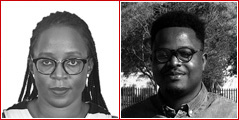 Authors: Nelly Warega* and Tomiwa Ilori**
*Legal Advisor, Women’s Link Worldwide
**Doctoral researcher, Centre for Human Rights, University of Pretoria
On 17 April 2020, a Twitter user tweeted about a hospital in Lagos that demanded personal protective equipment (PPE) from a woman seeking to give birth at the facility. The incident, according to the user happened at the General Hospital, Ikorodu, under the Lagos State Government Health Service Commission. The PPEs have become important for health workers given the surge in transmission COVID-19 across the world. However, despite the rising demand and scarcity of PPEs, a conversation on the propriety of placing the burden of procurement of PPEs on expectant mothers is vital.
Why we need both words and actions to help Africa’s children
Posted: 23 May, 2018 Filed under: Assefa Bequele | Tags: access to justice, African Governments, African Union, Call to Action, children, children suffering, children's rights, civil society organisations, Continental Conference on Access to Justice for Children, informal justice system, NGOs, prison, UN agencies, UN Global Study Leave a comment Author: Dr Assefa Bequele
Executive Director, Africa Child Policy Forum (ACPF)
We’re often told that actions speak louder than words, and it’s true we won’t change lives by simply talking about the problems. But I also think that you can’t make a real impact unless you’ve thoroughly debated and agreed what needs to be done. Words first, then actions.
I was reminded of this at the Continental Conference on Access to Justice for Children, held recently in the Ethiopian capital Addis Ababa. More than two hundred child rights experts, politicians, lawyers and civil society activists came together to try and find a way forward for the thousands of children across Africa who are denied access to justice. It’s easy for the cynics to dismiss such conferences as talking shops – fine words and discussions, but little in the way of concrete action. And if we had simply presented and debated the issues, there could have been some truth in that
 AfricLaw