
Empowering African Governance: Unveiling the Path to Accountability and Emancipation
Posted: 21 August, 2024 Filed under: Micha Wiebusch | Tags: A Theory of Africanizing International Law, accountability, Africa, African Governance, Emancipation 1 Comment Author: Micha Wiebusch
African Court on Human and Peoples’ Rights
Have you ever felt frustrated when you are working on something and someone comes along and tells you, “you should do it this way”? Or, they even say “you should do it my way”. Or worse, they just push you aside and do it themselves, or they threaten or even apply physical force if you do not do it their way. That sense of annoyance, when receiving the “advice”, and in its extreme variation, the loss of dignity when being physically coerced, is at the core of this book.
While those feelings are discussed primarily in an African context, the book acknowledges the occurrence of those feelings in different geographical spaces, cultures, social settings and throughout time.
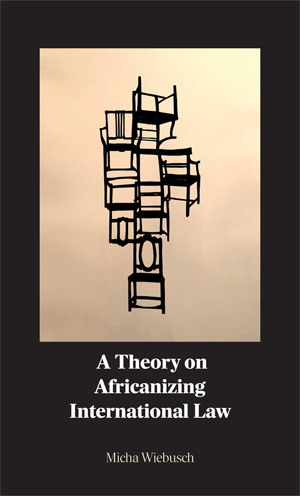
The book, A Theory of Africanizing International Law (TAIL), explores the history of the age-old desire for emancipation. It is about power, resistance and conquest. It is about rulers and their advisors. It is about grandiose ambitions as well as failures and disappointments along the path of manifesting those ambitions.
TAIL sets out to make sense of the desires of those in power and those who seek it to unify a vast geographical mass; not through military campaigns (although there is some of that as well), but rather through a gentler approach of consensus building, experience sharing and norm entrepreneurship.
In essence, TAIL asks the question: How is Africa governed and why does it matter? It won’t surprise you that the answer is far more complex than you or I initially thought. There are immeasurable levels of intricacies and multitudes of perspectives that need to be unpacked when attempting to make sense of the forces behind the governance of a whole continent.
But that was the ambition of this book. To develop a framework to explain the “thinking and doing” behind the efforts to generate harmony across the African continent and make its inhabitants richer, safer, healthier, as well as more knowledgeable, connected and empowered.
The approach adopted in telling the story behind the emergence of a continental government of, by and for the people of Africa, is one that didn’t try to leave out the tensions, contestations and contingencies that underlie the development of political manifestos and the challenges of their implementation. Rather, the book seeks to embrace them and reveal the behavioural patterns and variables that shape the trajectories of ruling the African continent.
Focussing on the aspirations for the continent, the articulation into legal texts and the varying methods deployed to give “real world” effects to these aspirations, the book traces and documents the different steps involved to create impact – to make a difference.
But in doing so, TAIL also reveals the often-hidden ways that unseen actors influence the framing and shaping of the agenda to rule the world, or in this case, to rule the continent. Furthermore, the book discloses the dirty secrets of how accountability can be avoided by those in power. In response, TAIL lays out an unapologetic political agenda on how governance of the continent can be made more transparent, inclusive and participatory, to the detriment of those who would probably prefer that the governing of Africa remains obscure so as to avoid any real accountability.
Altogether, TAIL makes the argument for greater accountability in governing Africa and it sets out how that can be achieved and what should be prioritised. While that point may not be incredibly revelatory, what is novel is this book’s emphasis on the development of new mental models and new language oriented towards empowerment. The expectation being here that these new mental frames and language – if further developed and adopted – will embolden people to be less affected by external actors dictating what to do or trying to impose what must be done. Herein lies, I believe the originality of this work and its greatest added value: the exposition of the tools and mindsets as well as the political-legal thought and consciousness needed to take extreme ownership which will allow for the discovery of a path that will make peoples’ lives better by gradually learning from mistakes, rather than searching for acontextual one-size-fits-all solutions.
***
The book can be downloaded (for free) in full or per chapter here
About the Author:
Micha Wiebusch is an Associate Professor (adjunct) at the Faculty of Law of the University of Cape Town, where he heads the Research Unit of the Judicial Institute for Africa (JIFA). He is also a senior legal officer at the African Court on Human and Peoples’ Rights, African Union. The views expressed in this book are personal and should not be ascribed to any of the institutions with which the author works.
 AfricLaw
Great information!