
Internet Shutdowns in Sudan: From Authoritarian Tool to Weapon of War
Posted: 30 August, 2024 Filed under: Razan E H Ali | Tags: censor information, civil unrest, control, displacement, dissent, elections, electoral fraud, electronic communication services, freedom of expression and access to information on the Internet, human rights violations, humanitarian crisis, internet blackout, internet shutdowns, Model Law, national security, periods of conflict, political transition, refugees, Sudan, war-related information Leave a comment Author: Razan E H Ali
LLM Candidate, Centre for Human Rights, University of Pretoria
Introduction
Internet shutdown or blockage means the deliberate suspension or termination of internet and electronic communication services, making them inaccessible or practically inoperable for a particular group of people or geographic area, usually to control the flow of information.[1]
This exercise has been used by governments as a tool to suppress dissent, censor information, conceal serious infringements of individual rights, and evade accountability for human rights violations, especially during periods of conflict, civil unrest, and contested political transitions.[2]
Enhancing Access to Information through Community Media in South Africa
Posted: 28 August, 2024 Filed under: Hlengiwe Dube | Tags: Access to Information, accessibility, accurate information, community broadcasters, Community Media, cultural practices, Declaration of Principles on Freedom of Expression and Access to Information in Africa, democratic participation, diversity, essential information, inclusivity, informed decision-making, International Federation of Journalists, linguistic preferences, local issues, mainstream media, religious information, right to freedom of expression, South Africa Leave a comment Author: Hlengiwe Dube
Centre for Human Rights, University of Pretoria
Introduction
South Africa’s community media sector plays a crucial role in addressing the diverse needs and interests of its various geographic and interest-based communities by ensuring access to relevant and accurate information. These media outlets are dedicated to developing and disseminating content that reflects local issues, cultural practices, and linguistic preferences. This localised approach ensures that content is tailored to the immediate needs and interests of specific communities, which is vital for community engagement and empowerment. By focusing on the specific concerns and interests of their audiences, community media provides essential information that might not be covered by mainstream media, reinforcing the public’s right to access crucial information. This access supports informed decision-making and strengthens local identity, promoting active civic participation and contributing to the overall resilience and cohesion of the community.
Back to Basics: From the medical model to the social model of disability rights – where are we now?
Posted: 26 August, 2024 Filed under: Neville Mupita | Tags: disability rights, environmental barriers, human rights frameworks, legislation, medical condition, medical intervention, medical model, ongoing challenges', persons with disabilities, policies, rehabilitation programs, social model, societal barriers, subversive oppression, unemployment rate, United Nations Convention on the Rights of Persons with Disabilities Leave a comment Author: Neville Mupita
Centre for Human Rights, University of Pretoria
In recent years due to the growing recognition of the need for a paradigm shift, the international community has witnessed major progress in advancing the rights of persons with disabilities. This is a shift from viewing disability as a medical condition or an inherent deficit to a view that understands that disability is a result of environmental and societal barriers. The reimagining of disability was and is a practical necessity as it plays a major role in legislation, policies and everyday interactions.
Miss Universe Mauritius 2024: A landmark in the legal battle for transgender equality
Posted: 23 August, 2024 Filed under: Lakshita Kanhiya | Tags: anti-discrimination protections, Association VISA-G, beacon of hope, Central Population Database, Civil Status Act of 1981, discrimination, gender identity, human rights, international human rights treaties, Jeanny Michelle Karla Fanfan, legal framework, legal obstacles, legal recognition, LGBTQ+, Mauritius, Miss Universe Mauritius 2024, sexual orientation, stigmatisation, transgender persons, transgender rights, Young Queer Alliance Leave a comment Author: Lakshita Kanhiya
Pan-Africa ILGA
The historic participation of Jeanny Michelle Karla Fanfan as the first transgender woman in Miss Universe Mauritius 2024 marks a significant milestone in the fight for transgender rights and inclusivity in Mauritius.[1] This moment not only symbolises progress within the realm of beauty pageants but also serves as a powerful platform to discuss the broader legal, social, and human rights challenges faced by transgender persons in Mauritius. As a general observation, the legal recognition and protection of transgender rights in Mauritius remain areas of significant concern, reflecting a broader global struggle for equality and non-discrimination.
Empowering African Governance: Unveiling the Path to Accountability and Emancipation
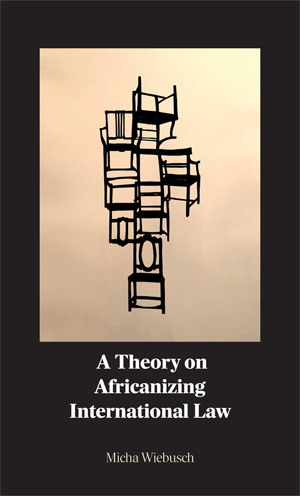
Posted: 21 August, 2024 Filed under: Micha Wiebusch | Tags: A Theory of Africanizing International Law, accountability, Africa, African Governance, Emancipation 1 Comment Author: Micha Wiebusch
African Court on Human and Peoples’ Rights
Have you ever felt frustrated when you are working on something and someone comes along and tells you, “you should do it this way”? Or, they even say “you should do it my way”. Or worse, they just push you aside and do it themselves, or they threaten or even apply physical force if you do not do it their way. That sense of annoyance, when receiving the “advice”, and in its extreme variation, the loss of dignity when being physically coerced, is at the core of this book.
While those feelings are discussed primarily in an African context, the book acknowledges the occurrence of those feelings in different geographical spaces, cultures, social settings and throughout time.
The injustice of climate mitigation strategies on pastoralist communities in Kenya: An international law perspective
Posted: 19 August, 2024 Filed under: George Njogu | Tags: carbon trading, climate change framework policy, climate change mitigation strategies, climate finance, disease management, environmental justice, Food and Agriculture Organisation, global development objectives, global warming, government, greenhouse gas (GHG) emissions, injustice, international environmental law, international law, Kenya, Kenya Wildlife Conservancy Association (KWCA), Kenya's State Department of Livestock and Fisheries, Kyoto Protocol, livelihood diversification, livestock, Nationally Appropriate Mitigation Action (NAMA), policies Leave a comment Author: George Njogu
Kabarak University School of Law
Pastoralist communities in Kenya, whose livelihoods depend on livestock, are increasingly being required to reduce their herds as part of climate change mitigation strategies. While the intention behind these measures is to combat global warming and climate change, they disproportionately affect these communities, whose contributions to climate change are minimal compared to industrial activities in developed countries. This disparity raises significant concerns about fairness and equity under international law. This article seeks to explore the reason behind these mitigation practices and recommends a solution to the predicament.
Livestock accounts for approximately 10% of Kenya’s national gross domestic product (GDP) and over 50% of the agricultural GDP. The sector employs half of the agricultural labour force.[1] The primary stakeholders in this subsector are pastoralists and farmers, who primarily raise animals for food and income generation. For pastoralists, however, livestock also serves as a symbol of self-esteem and wealth within their communities.[2]
Unlocking sustainable development: How foreign direct investment shapes Africa’s future
Posted: 15 August, 2024 Filed under: Elim Shanko, Khushi Agrawal | Tags: 2030 Agenda, 2063 Agenda, African Continental Free Trade Area, climate change, developing countries, environmental degradation, environmental protection, FDI, fighting poverty, Foreign direct investment, global plan, global well-being, human rights abuses, international cooperation, reducing inequalities, social inclusion, sustainable development, Sustainable Development Goals Leave a comment |
Author: Khushi Agrawal Intern, RA Consulting |
 |
Author: Elim Shanko Sustainable development consultant, RA Consulting |
Introduction
Foreign direct investment (FDI) is a critical method of shaping economic growth and development for developing countries.[1] While instances of cross-border capital flow aim to foster improvement, it is becoming increasingly apparent that FDI is not the significant beneficiary of sustainable development it was originally believed to be.[2] The United Nations’ 2030 Agenda of Sustainable Development Goals (SDGs) are nowhere near their desired or planned standings.[3]
This article critically examines the current state of FDI and its effects on Africa’s developing economy, uncovers the challenges foreign investment is facing and searches for potential steps forward in achieving sustainability goals.
The Intersection of Gender Equality and Sustainable Development in African Communities
Posted: 12 August, 2024 Filed under: Elim Shanko, Keten Abebe | Tags: African Charter on Human and Peoples’ Rights on the Rights of Women in Africa (Maputo Protocol), Agenda 2063, Convention on the Elimination of All Forms of Discrimination against Women (CEDAW), egalitarian involvement, environmental degradation, gender discrimination, gender equality, gender parity, international treaty, labour exploitation, mitigation, National climate change policies (NCCPs), Nationally Determined Contributions (NDCs), natural resources, Paris Agreement, policy, poverty, quality of life, sub-Saharan Africa, sustainable development, United Nations’ (UN) Paris Agreement (PA), women's rights Leave a comment |
Author: Keten Abebe Intern, RA Consulting |
|
Author: Elim Shanko Sustainable development consultant, RA Consulting |
Introduction
As of 2019, approximately 60% of employed women within Sub-Saharan Africa worked in agriculture, a field gravely impacted by corporations’ exhaustive use of natural resources. The financialisaton and depletion of natural resources within these African communities leads many women to experience poverty and destitute living conditions. Approximately 62.8% of women worldwide who live in extreme poverty reside in Sub-Saharan Africa. Additionally, the reality of worsening environmental conditions exacerbates the deterioration of women’s quality of life. According to the UN Women’s Organisation, African women often overly endure labour exploitation within capitalist markets, leading to environmental degradation and unsustainable development practices to persist among financially driven corporations. Similarly, a brief submitted to the 2015 Global Sustainable Development Report (GSDR) emphasises the impracticality of achieving sustainable development within African communities if the alienation of half of the population (women and girls) persists socially, economically and politically. Ultimately, sustainable development within African communities cannot be achieved without gender parity.
Right to education: A conundrum for children with disabilities in South Sudan
Posted: 8 August, 2024 Filed under: Akot Makur Chuot, Yeabsira Teferi | Tags: African Charter on Human and Peoples’ Rights, Children with disabilities, contribution to the nation, delay of results, excessive heatwaves, fundamental human right, inaccessibility of classrooms, inclusive education, inexperienced teachers, limited education materials, long distances to and from schools, personal development, poor infrastructure, right to education, South Sudan, Transitional Constitution of the Republic of South Sudan of 2011, United Nations Convention on the Rights of the Child, United Nations Sustainable Development Goals Agenda 2030 1 Comment Author: Akot Makur Chuot
LLM Candidate, Centre for Human Rights, University of Pretoria
Introduction
As the world steers to inclusive education in line with the United Nations Sustainable Development Goals Agenda 2030, particularly goal 4, which reiterates the right to education for everyone, including children with disabilities, South Sudan lags in meeting this goal. The right to education is a fundamental human right upon which other rights can be achieved. Quality education equips children with the tools, talents, and skills to cope with the challenges they face in life and be responsible global citizens. Although South Sudan is a party to the African Charter on Human and Peoples’ Rights, the United Nations Convention on the Rights of the Child (CRC), and the Convention on the Rights of Persons with Disabilities (CRPD), and have enacted legislations that prohibit discrimination and guarantee all children’s right to education, children with disabilities face significant challenges in achieving the right to education.
Misinformation and disinformation in the digital age and its impact on the information ecosystem
Posted: 5 August, 2024 Filed under: Nomyezo Mqhele | Tags: accurate information, credible information, discrimination, disinformation, farm attacks, freedom of expression, Freedom of Reach, freedom of speech, heavy social media dependency, human rights violations, imposter content, information disorder, information ecosystem, misinformation, reliable news, scams, social media, South Africa, traditional media, white genocide Leave a comment Author: Nomyezo Mqhele
Multi-disciplinary human rights lawyer
Traditional media has been replaced with social media as a source of reliable news.[1] South Africa has reached 26 million social media users as of January 2024.[2] This represents a three-fold increase from 9.8 million users in 2014 and highlights the increasing dependence of people on social media instead of traditional media.[3] This heavy social media dependency creates space for information disorder to filter through. The pervasiveness of information disorder presents a serious threat to the information ecosystem, and to society, as it has the potential to significantly alter beliefs, behaviors and policy. Such information is rarely false, but it is used to distort understanding by including elements of accurate and inaccurate claims, making it complicated to judge fair and accurate information.
 AfricLaw