
Spotlighting Female Genital Mutilation: An Insidious International Human Rights Crisis
Posted: 6 October, 2025 Filed under: Amanda Janell DeAmor Quest | Tags: 200 million girls, Africa, Convention on the Elimination of all forms of Discrimination against Women, Convention on the Rights of the Child, female genital mutilation, fgm, global public health concern, human rights violation, initiation ritual for women and girls, international human rights law, nation-wide outrage, no benefits, physical force, prerequisite for marriage Leave a comment Author: Amanda Janell DeAmor Quest
Commonwealth Caribbean Lawyer
On August 11, 2025, the BBC reported the death of a one-month-old baby girl who had been subjected to Female Genital Mutilation (FGM) in the Gambia—a country that is one of 10 countries with the highest rates of FGM despite the practice having been outlawed there since 2015. This incident incited nation-wide outrage against FGM and decidedly affirmed its status as one of the most egregious manifestations of gender-based violence in the world today. FGM encompasses “all procedures that involve altering or injuring the female genitalia for non-medical reasons” and is mostly performed on girls between the ages of 5 and 9. For this reason, FGM is “recognised internationally as a violation of the human rights, the health and the integrity of girls and women” Unfortunately, despite its deleterious effects on the lives, health, safety, and well-being of approximately 200 million girls and women worldwide, FGM continues to be reverenced as a “cultural tradition” in adherent societies.
Harnessing Data for Human Rights and Sustainable Development: A Call to Action from the African Commission on Human and Peoples’ Rights
Posted: 23 January, 2025 Filed under: Hlengiwe Dube | Tags: abuse in data usage, accessible data, ACHPR, advancing human rights, Africa, African Commission on Human and Peoples’ Rights, data access, digital age, digital transformation, discrimination, economic growth, education, election processes, gender equality, governance, harnessing data access, health, human progress, poverty eradication, Privacy Concerns, privacy violations, Resolution ACHPR/Res.620 (LXXXI) 2024, sustainable development, The Africa We Want, unequal access to information, United Nations’ SDGs 1 Comment Author: Hlengiwe Dube
Centre for Human Rights, University of Pretoria
In a world increasingly shaped by the digital revolution, data has become one of the most valuable resources for economic growth, governance, and human progress. From enhancing public service delivery to promoting political participation, the transformative potential of data is undeniable. However, the rapid advancements in technology also bring significant challenges, including privacy concerns, unequal access to information, and the potential for abuse in data usage. Considering these complexities, during its 81st Ordinary Session in November 2024, the African Commission on Human and Peoples’ Rights (ACHPR), adopted Resolution ACHPR/Res.620 (LXXXI) 2024, which seeks to promote and harness data access as a tool for advancing human rights and sustainable development in Africa.
Spotlighting ACHPR Resolution 522: Protecting Women Against Digital Violence in Africa
Posted: 11 December, 2024 Filed under: Hlengiwe Dube | Tags: 16 Days of Activism against Gender-Based Violence, ACHPR Resolution 522, Africa, Cultural and social norms, cultural norms, cyberstalking, digital gender gap, Digital Violence, doxxing, gender inequality, gender-based violence, gender-sensitive media literacy, harmful surveillance laws, online harassment, social media platforms, violence against women, women’s rights Leave a commentAuthor: Hlengiwe Dube
Centre for Human Rights, University of Pretoria
The rise of digital technology has reshaped the world in various ways. While it has promoted progress in communication, education, and economic empowerment, it has also given rise to new forms of gender-based violence. In particular, women in Africa face unique challenges in the digital space, where digital violence, such as cyberstalking, online harassment, and the non-consensual sharing of intimate images, is becoming increasingly prevalent. In response to this growing issue, the African Commission on Human and Peoples’ Rights (ACHPR) adopted a landmark resolution in 2022 aimed at addressing the protection of women from digital violence. This resolution (ACHPR/Res. 522 (LXXII) 2022) is an important step in ensuring that women’s rights are upheld in the digital realm, as part of the broader agenda of combating gender-based violence.
The Deadly Intersection of Climate Change and Insecurity Hits Women and Girls the Hardest
Posted: 9 October, 2024 Filed under: Mary Izobo | Tags: Africa, climate change, climate-related disasters, climate-smart agriculture, conflict, conflict-affected regions, displacement, droughts, eco-tourism, economic opportunities, economic vulnerability, education, gender inequalities, girls, healthcare, Horn of Africa, increased hunger, insecurity, natural resources, political stability, poverty, renewable energy, resources, socioeconomic equality, violence, women, Women and Girls Leave a comment Author: Mary Izobo
International Human Rights Lawyer, Gender Equality Advocate and Governance Expert
Introduction
In today’s world, climate change is no longer just an environmental issue. It is a catalyst for conflict and insecurity. What is often overlooked is how this toxic mix impacts women and girls the hardest, especially in fragile and conflict-affected regions. When water sources dry up, droughts wipe out crops, and the land becomes infertile, competition for dwindling resources becomes violent. Women-led and gender-sensitive climate action in Africa is key to sustainable peace, political stability and greater socioeconomic equality.
From the Sahel to the Horn of Africa to Southern Africa, climate change fuels conflicts over natural resources like land, food and water, turning communities and countries against each other. In all of this chaos, women and girls bear the brunt. The effects of climate change and insecurity exacerbate existing gender inequalities, especially in countries facing economic and social inequalities, political instability and resource scarcity.
Agency and vulnerability in the intersection of abortion law and refugee experience in Kenya
Posted: 23 September, 2024 Filed under: Pawi Fortune | Tags: abortion, abuse, Africa, Dadaab, defilement, displaced persons, Federation of Women Lawyers (Fida – Kenya) & 3 others v Attorney General & 2 others, forced prostitution, foreign domination, gang rape, health care services, healthcare services, Kakuma, Kenya, maternal deaths, mental health, Ministry of Health Guidelines on the Management of Sexual Violence in Kenya, physical trauma, rape, refugees, safe abortion services, Sexual Offences Act, sexual violence, state of unrest, unintended pregnancies, unsafe abortions, unwanted pregnancy Leave a comment Author: Pawi Fortune
Kabarak University Law School
The number of refugees in Africa has been on the rise[1] with many people being morphed into refugee status by various reasons such as a state of unrest, foreign domination and internal/external aggression.[2] In pursuit of safer grounds, ‘aspirant refugees’ flee to other countries hoping for better conditions than that from which they fled. However, even in countries of asylum, displaced persons face a precarious existence devoid of guaranteed safety or survival. Dadaab and Kakuma, critical refugee sanctuaries in Kenya, shelter a diverse population of refugees fleeing instability in countries such as Somalia, the Democratic Republic of the Congo and South Sudan.[3] Nonetheless, mistakenly believing this new land to be a haven, refugees are subjected to unimaginable sexual violence, a cruel irony that erodes their dignity and sense of self to a degree that renders their prior persecution almost preferable. This paper aims serve as a lamentation, a call for help reflecting the pain of survivors of sexual violence in refugee camps who have succumbed to the dangerous consequences of unsafe abortions or lack of it due to inaccessibility of the appropriate health care services.
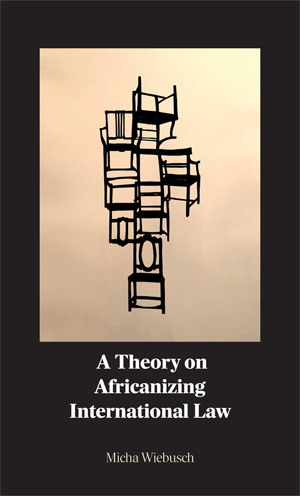
Empowering African Governance: Unveiling the Path to Accountability and Emancipation
Posted: 21 August, 2024 Filed under: Micha Wiebusch | Tags: A Theory of Africanizing International Law, accountability, Africa, African Governance, Emancipation 1 Comment Author: Micha Wiebusch
African Court on Human and Peoples’ Rights
Have you ever felt frustrated when you are working on something and someone comes along and tells you, “you should do it this way”? Or, they even say “you should do it my way”. Or worse, they just push you aside and do it themselves, or they threaten or even apply physical force if you do not do it their way. That sense of annoyance, when receiving the “advice”, and in its extreme variation, the loss of dignity when being physically coerced, is at the core of this book.
While those feelings are discussed primarily in an African context, the book acknowledges the occurrence of those feelings in different geographical spaces, cultures, social settings and throughout time.
Conversion Therapy in Africa: An Assault on Human Rights and Ethical Healthcare
Posted: 18 July, 2024 Filed under: Jarred H Martin, Pierre Brouard | Tags: Africa, anti-LGBTQ legislation, anti-LGBTQ sentiments, aversion techniques, cisgender, consensual same-sex sexual relationships, conversion practices, discrimination, electrical shocks to the genitals, gender identity, healthcare, healthcare settings, heterosexuality, human rights, lgbtq, medical interventions, psychological counselling, queer, religious beliefs, same-sex sexual imagery, sexual orientation, sexuality education, Uganda’s Anti-Homosexuality Act Leave a comment |
Author: Dr Jarred H. Martin (PhD Psychology), Department of Psychology, University of Pretoria |
 |
Author: Pierre Brouard (MA Clinical Psychology), Centre for Sexualities, AIDS & Gender, University of Pretoria |
Introduction
The recent publication of Outright International’s report, Health Ethics and the Eradication of Conversion Practices in Africa, draws needed attention to the prevalence of conversion practices in Africa, particularly within the context of healthcare settings. As psychologists, we write about conversion therapy as a subset of conversion practices (including those conducted by faith and cultural practitioners, often at the behest of family) aimed at changing an individual’s sexual orientation or gender identity and expression. Conversion therapy can include psychological counselling, medical interventions, and aversion techniques, such as electrical shocks to the genitals during exposure to same-sex sexual imagery.
The impact of trade-based money laundering on economic growth & development
Posted: 10 July, 2024 Filed under: Nasubila Ng’ambi, Yeabsira Teferi | Tags: AfCFTA, Africa, African Continental Free Trade Area, cultural development, economic development, Global Financial Integrity, illicit financial flows, right to economic development, Sustainable Development Goals, TBML, trade based money laundering Leave a comment Author: Nasubila Ng’ambi
LLB (cum laude) Nelson Mandela University
Introduction
The African Continental Free Trade Area (AfCFTA) is the African Union’s flagship regional economic integration project.[1] The AfCFTA aspires to lift 30 million people out of extreme poverty and to increase Africa’s income by $450 billion by 2035.[2] These goals are set to give effect to both Agenda 2063 and the UN’s sustainable development goals (SDGS).[3] However, these audacious goals are not without challenge as there are numerous risks associated with free trade areas (FTA) such as trade based money laundering (TBML). This article seeks to explore the implications of TBML on economic growth and development. Further, the article will highlight the need for an effective framework to ensure that TBML is mitigated.
Lost in Faith: The Growing Menace of Religious Fanaticism in Africa and the Need for Intervention
Posted: 7 June, 2024 Filed under: Murithi Antony | Tags: Africa, African Charter on Human and Peoples' Rights, Boko Haram, child sacrifice, ethical principles, fasting to the point of death, fundamental human rights, Good News International Church, human sacrifices, international human rights instruments, Mungiki movement, political instability, religion, religious fanaticism, religious freedom, right to religious freedom, terrorism, Yesu wa Tongaren Leave a comment Author: Murithi Antony
LL.B candidate, University of Embu
Religious freedom is a cherished right we uphold,
But when it’s misused, the consequences unfold.
Ideologies that propagate self-harm and hate,
Demand constant vigilance before it’s too late!
Introduction
Religion is a system of faith and worship centered around a belief in a supreme being and a set of moral or ethical principles. It encompasses a way of life that provides hope, guidance, and even companionship to many individuals. Religion serves as a source of strength, comfort, and meaning, especially for individuals who seek to understand their place in the world and the purpose of their existence. Religion influences people’s thoughts, actions, and their relationships with others. Such characteristics of religion has made several believers to engage in extreme and controversial actions, including among others; human sacrifices, fasting to the point of death, and terrorism, believing that they will receive eternal rewards from their deity. Such is what is depicted as religious fanaticism, which must be regulated for the sake of sanity and protection of fundamental human rights in society. Upon this background, this article aims to analyse the status of religious freedom in Africa, the impact of the emergence of religious fanaticism, and advocate for intervention.
 AfricLaw
Corporal punishment as a public health concern: Breaking the cycle of violence against children in Africa
Posted: 25 September, 2025 | Author: AfricLaw | Filed under: Nqobani Nyathi | Tags: 1.2 billion children, Africa, African Charter on the Rights and Welfare of the Child, African Committee of Experts on the Rights and Welfare of the Child, Children with disabilities, corporal punishment of children, dropout rates, General Comment 9, global public health concern, Guidelines on Ending Violence Against Children in Africa, no benefits, physical force, public health crisis, religion, religious traditions, tradition, violence, World Health Organisation (WHO) | 1 CommentDoctoral Candidate, Centre for Human Rights, University of Pretoria
On 20 August 2025, the World Health Organisation (WHO) launched a report declaring corporal punishment of children a global public health concern. By definition, corporal punishment is any punishment where physical force is used with the intention of causing some degree of discomfort or pain, however light.
The statistics are staggering. An estimated 1.2 billion children around the world are subjected to corporal punishment at home every year. Children exposed to such violence are more likely to suffer from anxiety, depression, low self-esteem and emotional instability. These effects often persist into adulthood, increasing the risk of alcohol and drug use, and violent behaviour. In schools, corporal punishment contributes to dropout rates and poor educational outcomes.
Read the rest of this entry »