
Digital Public Infrastructure Through an Open Government Lens
Posted: 11 February, 2026 Filed under: Hlengiwe Dube | Tags: access, accountability, AI registers, algorithmic bias, Algorithmic Impact Assessment (AIA) framework, automated social protection, data exchange platforms, Democratic Legitimacy, digital identity systems, Digital Public Infrastructure, digital service delivery, digital transformation, DPI, e-government, government reform, inclusion, oversight, public participation, Public Trust, transparency Leave a comment Author: Hlengiwe Dube
Senior digital rights and policy expert
Abstract
Digital Public Infrastructure (DPI) is rapidly being deployed worldwide, yet its governance is a significant blind spot in open government reform. While governments focus on digital service delivery, the underlying systems that determine access, inclusion, and fairness often operate without transparency, accountability, or public participation. This article argues that DPI must be governed through open government principles to prevent systemic harm such as exclusion from essential services, algorithmic bias, and eroded public trust and to realize its potential for public good. Using global cases, it shows how integrating transparency, oversight, and participatory design into DPI can turn digital infrastructure into a force for democratic accountability, rather than hidden control. Finally, the article calls for explicit inclusion of DPI governance into frameworks like the Open Government Partnership, ensuring that digital transformation encodes democratic values, not just technical efficiency, into the infrastructure of the state.
Lesotho: Shaping a New Path Through Transitional Justice
Posted: 9 January, 2025 Filed under: Mary Izobo | Tags: accountability, African Union, African Union Transitional Justice Policy, capacity-building workshop, Centre for the Study of Violence and Reconciliation, contested elections, CSVR, cultural heritage, fragile governance, governance challenges, healing, holistic policy framework, justice, Kingdom in the Sky, mental health, military coups, political crises, political instability, psychosocial support, reconciliation, stability, under-resourced Leave a comment Author: Mary Izobo
Advocacy Manager, Centre for the Study of Violence and Reconciliation
Introduction
Lesotho, a small mountainous nation nestled in the heart of Southern Africa, stands at a pivotal moment as it charts its path toward stability and justice. Often described as the “Kingdom in the Sky” because of its breathtaking highland terrain, Lesotho’s journey is defined by its rich cultural heritage and the challenges of political instability.
Oil production in South Sudan: A lifeline for the economy or an infringement on children’s right to a safe, clean and healthy environment?
Posted: 22 November, 2024 Filed under: Akot Makur Chuot, Yeabsira Teferi | Tags: accountability, African Charter on Human and Peoples’ Rights, African Charter on the Rights and Welfare of the Child, business enterprises, children’s rights, Constitution of the Republic of South Sudan of 2011, deaths of children, economic interference, effective remedies, environment, environmental assessments, environmental pollution, fairness, human rights, international human rights law, legislation, Ogoni people, Oil production, oil sector, oil-fields, South Sudan, UN Guiding Principles on Business and Human Rights, violations of children’s rights Leave a comment Author: Akot Makur Chuot
LLM Candidate, Centre for Human Rights, University of Pretoria
Introduction
Oil-operating companies have been acting carte blanche with absolute impunity in South Sudan without complying with international practices premised on human rights considerations. The human rights violations in Unity and Upper Nile States are a testimony that private businesses in the oil and gas industry are unfettered in South Sudan. As a result, the actions and omissions of oil-operating companies in South Sudan have resulted in violations of children’s rights as will be explored in section 4 of the article. This is attested by the birth of children with deformities, stillbirth and several health concerns. It can be argued that the failure of South Sudan to regulate the business enterprises in the oil sector is a breach of its obligations under international human rights law.
Challenges and Opportunities in Implementing Access to Information Laws
Posted: 9 September, 2024 Filed under: Chioma Henrietta Okoli | Tags: Access to Information Laws, accountability, Bureaucratic resistance, Challenges and Opportunities in Implementing Access to Information, civic engagement, cultural challenges, Culture of secrecy, democratic principles, FOI, freedom of information, fundamental right, good governance, Institutional Challenges, Lack of resources, open governance, Reluctance to share information, right to information, RTI, sensitive information, transparency Leave a comment Author: Chioma Henrietta Okoli
Senior Legal Officer, National Human Rights Commission, Nigeria
Introduction:
Access to information, often known as Freedom of Information (FOI) or Right to Information (RTI) is a fundamental right that enables individuals to seek, receive, and impart information freely.[1] It is a fundamental cornerstone of transparent governance, democratic principles, and citizen empowerment. It enables individuals to participate in the decision-making processes of their governments, fosters accountability, and strengthens the foundations of democratic societies.[2] To this end, countries worldwide have enacted access to information laws with the aim of ensuring public access to government and privately held information.[3] However, despite the noble intentions of these laws, their effective implementation remains a multifaceted challenge, impeding the realisation of a truly open and accountable society.
Empowering African Governance: Unveiling the Path to Accountability and Emancipation
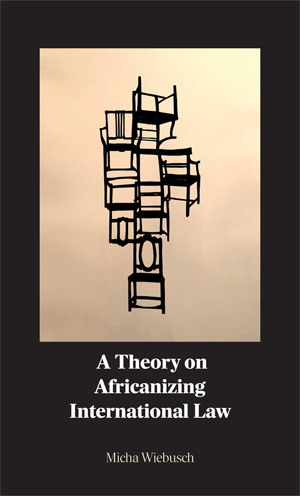
Posted: 21 August, 2024 Filed under: Micha Wiebusch | Tags: A Theory of Africanizing International Law, accountability, Africa, African Governance, Emancipation 1 Comment Author: Micha Wiebusch
African Court on Human and Peoples’ Rights
Have you ever felt frustrated when you are working on something and someone comes along and tells you, “you should do it this way”? Or, they even say “you should do it my way”. Or worse, they just push you aside and do it themselves, or they threaten or even apply physical force if you do not do it their way. That sense of annoyance, when receiving the “advice”, and in its extreme variation, the loss of dignity when being physically coerced, is at the core of this book.
While those feelings are discussed primarily in an African context, the book acknowledges the occurrence of those feelings in different geographical spaces, cultures, social settings and throughout time.
Pay or be denied: The impact of fees and charges on journalists’ perception of the effectiveness of Ghana’s Right to Information Law
Posted: 26 June, 2024 Filed under: Kwaku Krobea Asante | Tags: Access to Information, accountability, ATI, corruption, economic mismanagement, fundamental human rights, Ghana, Ghana’s Right to Information Commission, journalists, lack of accountability, military coups, Model Law of Access to Information for Africa, restriction to information access, right to access information, transparency Leave a comment Author: Kwaku Krobea Asante
Senior Programme Officer, Media Foundation for West Africa (MFWA)
Introduction
There has been a global upsurge in the demand for transparency, accountability and the establishment of norms in favour of democracy [1]. These norms include the passage of universal Access to Information (ATI) laws and the respect for the right to access information across the world[2].
In Africa, the adoption of the Model Law of Access to Information for Africa in 2013 was a response to emerging questions about widening inequality, widespread poverty, corruption and lack of accountability in public office. Indeed, the model law is consistent with other relevant laws including the African Charter on Human and Peoples’ Rights (the African Charter).
Testing the Waters of Transparency: The Impact of Namibia’s Access to Information Act on Constitutionalism
Posted: 18 June, 2024 Filed under: Dunia P. Zongwe | Tags: Access to Information Act, accountability, ‘Fishrot’ Files, constitutionalism, corruption scandal, Gondwana case, Haufiku case, human rights, international standards, Namibia, national security, RAI, right to access information, rule of law, secrecy, secret information Leave a comment Author: Dunia P. Zongwe
Associate Professor, Alliance School of Law, India; and Adjunct Associate Professor, Walter Sisulu University, South Africa
Abstract
This paper decodes the right to access information (RAI) in the newly enacted Access to Information Act in Namibia. Passed by Parliament in 2022, this Act came on the heels of the infamous ‘Fishrot’ Files, the country’s ugliest corruption scandal, uncovered through massive information leaks. This paper evaluates the efficacy of the Act in advancing the goals of constitutionalism by enabling individuals to access information robustly and transparently, thereby holding the ruling elite accountable to the public.
This paper unfolds in four steps. It begins by describing the loopholes that existed in the law before 2022, pondering what these lacunae imply for constitutionalism. Next, the paper dissects the RAI in theory, doctrine, and as presented in the Access to Information Act 8 of 2022. It then examines the Act’s provisions on RAI against the provisions laid out in the 2013 Model Law on Access to Information for Africa, highlighting key parallels. Lastly, drawing on those parallels, the paper assesses whether the RAI, as consecrated in the 2022 Act, advances the goals of constitutionalism. The paper argues that, by excluding from its scope Cabinet deliberations, the Act watered down the presumption of disclosure, and, in that sense, it failed to close the last loopholes that allowed the executive branch to evade accountability. This paper adds to the relevant literature by revealing that implementing the RAI and the disclosure presumption may constrain the executive more effectively than the other organs of the state.
Where to Zimbabwe? Another stage set for flawed elections under Mnangagwa’s leadership
Posted: 3 April, 2023 Filed under: Nqobani Nyathi | Tags: accountability, African Commission on Human and Peoples Rights, amendment of the Constitution, by-elections, constitution, Constitution of Zimbabwe, democracy, electoral disputes, Emmerson Mnangagwa, free and fair elections, government-affiliated media, Guidelines on Access to Information and Elections in Africa, human rights, Luke Malaba, peaceful resolution, Private Voluntary Organisations Bill, PVO Bill, rise to power, unlawful killings, violence, ZEC, Zimbabwe, Zimbabwe Electoral Commission 1 Comment Author: Nqobani Nyathi
Doctoral Candidate and Project Officer, Centre for Human Rights, University of Pretoria
In 2018, and perhaps at the peak of his popularity, Emmerson Mnangagwa narrowly won a disputed Presidential election in Zimbabwe. In the aftermath, chaos ensued, and soldiers shot and killed people. No one has been held accountable so far, perpetuating an environment of impunity and fear. Mnangagwa’s unconstitutional rise to power the previous year had subverted democracy and as predicted, he has continuously demonstrated an unsettling disregard for the Constitution and the principles of democracy. Zimbabwe’s next general election is scheduled for some time this year, on a date yet to be announced. If Mnangagwa persists on his current path of undermining the Constitution, the election could lack the legitimacy necessary for a functioning democracy.
Inclusive national dialogue and accountability for rights violations can heal Ethiopia from a culture of impunity
Posted: 16 May, 2022 Filed under: Dunia Mekonnen Tegegn | Tags: (CEDAW), abduction, accountability, anxiety, conflict, Convention on the Elimination of Discrimination against Women, crimes against humanity, Criminal Code, depression, Ethiopia, Ethiopia’s National Defense Force, gang rape, gender-based violence, impunity, International Criminal law, mental health problems, sexual violence, sexually transmitted diseases, Tigray People Liberation Front, transitional periods, unwanted pregnancy 2 Comments Author: Dunia Mekonnen Tegegn
Human Rights Lawyer and Gender equality advocate
On 3 November 2020, conflict broke out between the Tigray People Liberation Front and Ethiopia’s National Defense Forces when the Tigray People Liberation Front assaulted the Northern command. Due to the conflict in Ethiopia, women and girls continue to bear the brunt of the cruel and inhuman acts committed by all parties involved in the conflict for the last 17 months. Many have lost their lives, suffered sexual violence, been displaced, and starved. Young girls, women living with disability, older women, and refugee women have been the target of brutal sexual violence. These crimes are horrific in nature as they represent the level of vengeance and humiliation pursued by actors to the conflict. Reports have highlighted the extent of these violations and implicated all sides to the conflict in war crimes and crimes against humanity. Read the rest of this entry »
Reflecting on the South Sudan we want: 10 years on after independence
Posted: 23 July, 2021 Filed under: Joseph Geng Akech | Tags: 10 years, accountability, Armed Struggle, Commission for Truth, Compensation and Reparation Authority, conflict, constitutional democracy, corruption, dream nation, human rights, inclusive, independence, justice, liberty, non-violent, peace, pluralistic, prosperity, Reconciliation and Healing, rule of law, silencing the guns, South Sudan, South Sudan we want, SPLM/A, Sudan, Sudan People’s Liberation Movement/Army, underdevelopment, war 2 Comments Author: Joseph Geng Akech
South Sudanese human rights lawyer and LLD candidate, University of Pretoria, South Africa
Summary
New nations struggle to find their route to stability, and they have the opportunity to learn from those which have already travelled the path towards nation-building. The birth of South Sudan was received with joy, far and wide, as it emerged out of decades of sacrifices for principles that every South Sudanese believe in – justice, liberty and prosperity. The hard-won new State was born with much hope, but it rapidly became a monster of its own making. Consumed by senseless wars, endemic corruption and underdevelopment – iniquities which fomented popular resistance and drove the need for secession.
 AfricLaw