
The Impact of Digitisation of Asylum Seeker Systems in South Africa: Challenges and Opportunities
Posted: 4 October, 2024 Filed under: Zekhethelo Cele | Tags: access to smartphones, anguage barriers, anti-migrant sentiments, asylum seeker, asylum seeker management system, Asylum Seeker Systems, digital illiteracy, online renewal system, Refugee Act, Refugee Visas, South Africa, technological literacy, United Nations High Commissioner for Refugees, user-friendly online application system 2 Comments Author: Zekhethelo Cele
LLM Candidate, Centre for Human Rights, University of Pretoria
The South African asylum seeker management system has faced intense scrutiny in recent years, grappling with the challenges posed by an overwhelming number of applications. The Department of Home Affairs (DHA) has acknowledged its struggle to accommodate the influx, prompting various interventions from the international community, including the United Nations High Commissioner for Refugees (UNHCR), aimed at alleviating this crisis.
In the wake of the COVID-19 pandemic, Refugee Reception Offices (RROs) were slow to reopen fully, leading to the introduction of an online application process. Initially, this system was designed to assist those already holding Temporary Asylum Seeker or Recognised Refugee Visas. However, it quickly became apparent that this shift created significant barriers for many in the refugee community. A substantial portion of visa holders lacked access to smartphones or the technological literacy required to navigate the online renewal system, leaving them vulnerable and frustrated.
As a result, many asylum seekers turned to non-governmental organisations (NGOs) for assistance, while some local internet café owners, primarily from immigrant communities, seized the opportunity to charge fees for submitting renewal applications. This practice raises serious concerns, as the Refugee Act clearly stipulates that asylum seekers and refugees should not be charged for applying for asylum or renewing their permits.
For those with limited financial resources, technological skills, and facing language barriers, the system became increasingly difficult to navigate. South Africa hosts a significant number of refugees from Somalia, DRC, Rwanda, Zimbabwe, South Sudan, Burundi and regions where indigenous languages are predominant, further complicating their ability to engage with a digital system during a period when in-person support was severely restricted. Research from the McKinsey Global Institute emphasises that establishing a new digital identity system is crucial for fostering inclusive growth, yet the current implementation falls short of this ideal.
In 2022, the DHA reopened its doors to new asylum seekers, but with a critical caveat: individuals must now present a confirmation of appointment obtained through an online application to enter the RROs. Previously, asylum seekers could simply walk into an office to present their claims. While the Refugee Act mandates that interviews be conducted in a language the asylum seeker understands, the shift to a fully digital system raises questions about who bears the responsibility for providing interpretation services. As it stands, asylum seekers may find themselves shouldering the costs of interpretation and online applications.
Moreover, many new asylum seekers face ill-treatment, humiliation, hate crimes, and extortion from law enforcement due to their lack of digital literacy and understanding of the system. Compounding these challenges is the backlog of cases within the system. A 2019 Auditor General Report revealed a staggering backlog of 147 794 cases at the Refugee Appeals Board, indicating that it could take up to 68 years to resolve these outstanding issues. While the UNHCR has stepped in to assist the DHA, rising xenophobic and anti-migrant sentiments have shifted the Department’s focus towards deporting undocumented individuals rather than addressing the inefficiencies of the digital asylum system.
Despite these challenges, there is a silver lining. South Africa is home to approximately 250 250 refugees and asylum seekers from countries such as Burundi, the Democratic Republic of the Congo, Rwanda, South Sudan, Ethiopia, Somalia, and Zimbabwe. Organisations like the UNHCR and various civil society groups must take proactive measures to prepare these individuals for the realities of asylum systems, including addressing language barriers and enhancing legal representation.
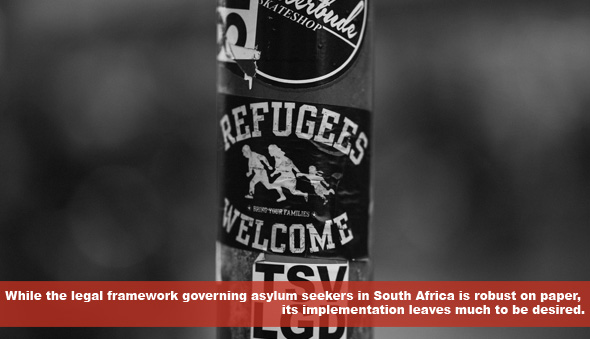
While the legal framework governing asylum seekers in South Africa is robust on paper, its implementation leaves much to be desired. Many asylum seekers report difficulties in navigating the asylum management system, a lack of quality interpretation services, and inadequate legal representation. These barriers contribute to alarmingly high rejection rate often due to factual errors or misapplications of local and international refugee law compounded by digital illiteracy.
The recent push towards digitising the asylum seeker system presents a unique opportunity to streamline processes and improve efficiency. By implementing a user-friendly online application system and enhancing the management of asylum claims, the DHA could alleviate administrative bottlenecks and enhance the overall experience for asylum seekers. However, it is vital to ensure that this digitisation is inclusive, providing support for those with limited access to technology or digital literacy.
Recognising the inherent worth and potential of every individual seeking asylum in South Africa is crucial for creating a more equitable and effective system. This journey begins with addressing the administrative shortcomings that have long plagued the asylum process, including the backlog of cases and the need for clearer communication regarding the status of Refugee Reception Offices. If implemented thoughtfully and inclusively, the digitisation of the asylum system holds the promise of streamlining processes, improving efficiency, and ultimately reducing the uncertainty and anxiety experienced by asylum seekers and refugees in South Africa.
By embracing these challenges and opportunities, South Africa can pave the way for a more just and humane asylum seeker system, one that upholds the rights and dignity of all individuals seeking refuge within its borders.
About the Author:
Zekhethelo Cele is an attorney of the High Court of South Africa and practices law at Lawyers for Human Rights under the Refugee & Migrant Rights Rights & Penal Reform Programmes. Under these programmes she has litigated up to the Supreme Court of Appeal on immigration and refugee law issues in South Africa. She is currently completing her Master of Laws in Human Rights and Democratisation in Africa at the University of Pretoria.
 AfricLaw
Do you need a loan of any kind? Our loan interest rate is just 2%.we provide all kinds of loans, To apply email us via: Email:murphyflorence015@gmail
Thank you, Ms. Zekhethelo Cele, for this timely and important article, and for your continued commitment to refugee and asylum seeker protection through your work at Lawyers for Human Rights.
As a refugee and refugee community leader, I strongly agree that while digitisation is not inherently negative, its current implementation has created new barriers for many asylum seekers who lack access to data, devices, digital literacy, and language support. In practice, this has deepened exclusion and shifted the burden of an already complex system onto the most vulnerable.
Digitization must be human-centered and rights-based, with free alternatives, interpretation, legal support, and meaningful participation of refugee communities in its design and review. Without these safeguards, technology risks becoming a gatekeeper rather than a tool for protection.