
Falling short of expectations: Safe City Project and the unsolved murder in Mauritius
Posted: 4 December, 2023 Filed under: Lakshita Kanhiya | Tags: biometric data, CCTV camera surveillance systems, drug trafficking, facial recognition, false accusations, intelligent command system, Kistnen murder, Mauritius, national security, organised crime, Safe City images, Safe City project, Soopramanien Kistnen, terrorism, transparency, unavailable images, unsolved murder, violence 1 Comment Author: Lakshita Kanhiya
Human Rights Advocate
In a world full of violence, criminality, organised crime and drug trafficking, there is a legitimate quest for security. Mauritius, renowned for its picturesque beaches and vibrant cultural diversity, is not exempt from the challenges posed by national security. Much like many other countries, it grapples with the spectre of criminality, terrorism, and various public safety issues.[1] The evolution of technology in the digital age is fundamentally altering the way people engage with one another in society, and as society undergoes transformation, so do the tools, methodologies, and ideologies used to address these challenges.[2] Therefore, the inception of the Safe City project in Mauritius stemmed from the pressing demand for enhancing national security, particularly with a focus on preserving the country status as a secure destination for tourists, given that tourism plays a pivotal role in the Mauritian economy.[3] However, the project’s laudable objectives are overshadowed by the glaring human rights concerns, as exemplified by the Kistnen case, where the inadequacies of the system came to light.
In accordance with a cabinet decision made on 15 December 2017, the Cabinet office has approved the contract agreement between the Mauritius Police Force (MPF) representing the Ministry of Defence, Home Affairs, and External Communications, and Mauritius Telecom (MT) for the implementation of the Safe City Project.[4] Besides, the Data Protection Office has established a Code of Practice for the operation of the Safe City System(s) operated by the MPF, which came into effect on October 30, 2020.[5]
The Safe City project encompasses 4000 intelligent CCTV camera surveillance systems, a multimedia radio trunking system consisting of 4500 devices, a central monitoring and management system, an integrated emergency response management system, and an intelligent command system.[6] These components are expected to enhance the MPF’s ability to gather valuable intelligence and optimise their response capabilities. The Safe City project stands as a pioneering government-backed endeavour, with installations spanning 2000 locations across the island. It operates under a 20-year operating lease agreement, with the following cost breakdown: Year 0: USD 13 million, Year 1 to 7: USD 18.9 million annually, and Year 8 to 20: USD 23.9 million annually as stipulated in the contractual terms.[7]
The contract for the project implementation was granted to MT, following the guidelines specified in Section 3(1) (a) of the Public Procurement Act.[8] A notable feature of this project involves the incorporation of facial recognition software within the system. This software utilises biometric data from the National identity card to track individuals across the nation, with 300 cameras dedicated to monitoring vehicles. These cameras are predominantly situated along highways, main roads, and various strategic locations within cities, towns, and villages. The selection of these sites was based on criteria related to areas with high crime rates, accident-prone zones, densely populated commercial areas, and major roads with substantial traffic flow, with the aim of combating crime, drug proliferation and assist in more effective traffic road safety management.[9]
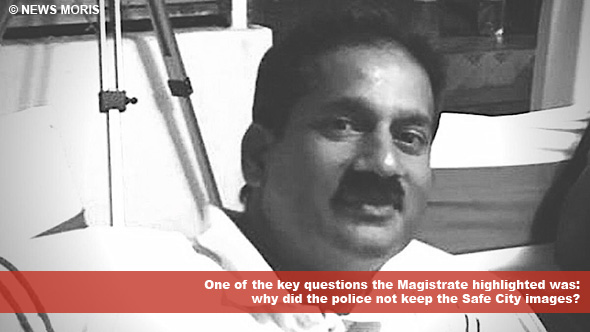
Nationally, there is a growing debate over the balance between democracy, human rights and national security. The Safe City project seems commendable on the surface, promising to reduce crime, enhance emergency response, and boost public safety. However, beneath this exterior of security, a complex surveillance network warrants reflection.[10] The well-known October 2020 case[11] of Soopramanien Kistnen (Kistnen murder),[12] initially ruled a suicide by the MPF, but later determined to be a murder by Magistrate Mungroo-Jugurnath’s investigation, underscores this connection.[13] One of the key questions the Magistrate highlighted was: why did the police not keep the Safe City images?[14] During the court hearing, the in-charge of the Safe City Operation Command Centre provided footage showing Kistnen’s movements on the day of his disappearance, indicating that Safe City cameras in certain areas had unavailable images.[15] The interrogations of the police officers involved in this case hearings,[16] unfortunately brought different versions on the Safe City footages, and as a result raised questions about the independence of the MPF. Highlighting this connection, the Magistrate, in her report[17] on the high-profile judicial inquiry, detailed that ‘I consider the conduct of the police in the present case (Kistnen) to be abhorrent. The way the enquiry was conducted fell so below what can be considered reasonable that it marks a new level of incompetence.’[18] A case originally characterised as a suicide by the MPF unfolded to reveal broader implications, encompassing efforts to influence the investigation’s direction, and the absence and manipulation of information from the Safe City footage of the Operation Command Centre, again, in charged by the MPF.
Beneath the surface of the Safe City project on national security enhancement lies a web of concerns related to civil liberties, transparency, and accountability. The collection of massive amounts of personal data raises the risk of misuse. If not adequately protected, this information could be accessed by unauthorised individuals or entities, leading to identity theft, discrimination, or other forms of abuse. Notably, the Safe City project is sometimes criticised for its cost implications and the lack of transparency in its operations.[19] In fact, when the public is not well-informed about the details of the surveillance methods, data storage, and analysis processes, it becomes challenging to assess the potential impact on fundamental rights. Further, there is a risk that the initial intentions of a Safe City project could expand beyond public safety and law enforcement to encompass other areas of governance, potentially leading to the abuse of surveillance powers.
Moreover, the integration of facial recognition software and the extensive network of surveillance cameras infringe upon the right to privacy. Citizens are subjected to constant monitoring, with their movements tracked without their explicit consent. The selective availability of footage, as demonstrated in the Kistnen case, undermines the dignity of individuals, leaving them vulnerable to false accusations and compromising the integrity of criminal investigations. The need for robust checks and balances within law enforcement agencies is underscored, emphasising their role in protecting citizens rather than being beholden to political interests. The constitutional autonomy of the Commissioner of Police in Mauritius is an essential element in this regard.
As a result, the conflict between the quest for national security and the preservation of human rights forms the crux of this article. While the Safe City project in Mauritius purports to enhance national security, the Kistnen case serves as a stark reminder of the potential pitfalls, underscore the need for a re-evaluation of the Safe City project to ensure it aligns with the principles of democracy, human rights, and the rule of law as set out in the legislative acts and international commitments rooted in the state ratification of key international and regional human rights instruments under the auspices of the United Nations (UN) and the African Union (AU). However, as exemplified by the Kistnen case, existing institutions have struggled to break through the barriers of opacity, lack of transparency, and impunity.
[1] ‘Safe Mauritius, the Inspiration for Heaven’ (Huawei, October 2018) < https://www.huawei.com/uk/corporate-information/talk-about-ict/stories/safe-mauritius-the-inspiration-for-heaven > accessed 28 October 2023.
[2] B Jili ‘The Spread of Surveillance Technology in Africa Stirs Security Concerns’ (Africa Centre for Strategic Studies, 11 December 2020) < https://africacenter.org/spotlight/surveillance-technology-in-africa-security-concerns/ > accessed 28 October 2023.
[3] ‘Safe City?’ (Mauritius times, 15 December 2020) < http://www.mauritiustimes.com/mt/safe-city/ > Accessed 28 October 2023.
[4] Mauritius National Assembly, Hansard 23 April 2019.
[5] Code of practice for the operation of the Safe City system(s) operated by the Mauritius Police Force (2020) Data Protection Office, available at <https://dataprotection.govmu.org/Documents/Code%20of%20Practice%20for%20the%20operation%20of%20the%20Safe%20City%20System%28s%29%20by%20MPF.PDF >.
[6] Mauritius National Assembly, Hansard, 16 October 2018 and Parliamentary Question No. B/876.
[7] Mauritius National Assembly, Hansard, 15 May 2018.
[8] Mauritius National Assembly, Hansard, 15 May 2018, Public Procurement Act 33/2006.
[9] Mauritius Nationa Assembly, Hansard, 21 May 2019.
[10] ‘THE ALL-SEEING EYES : On the Safe City Project’ (Le Mauricien, 7 June 2018) < https://www.lemauricien.com/le-mauricien/the-all-seeing-eyes-on-the-safe-city-project/209692/ > accessed 28 October 2023.
[11] V Abel ‘Un cadavre carbonisé retrouvé dans un champ de cannes’ (L’express, 18 October 2023) < https://lexpress.mu/article/383947/un-cadavre-carbonise-retrouve-dans-un-champ-cannes > accessed 28 October 2023.
[12] S Kistnen was a political operative for the Militant Socialist Movement (MSM) governing party and was found dead in unexplained circumstances after reportedly threatening to denounce a corruption case to the Independent Commission Against Corruption (ICAC).
[13] S Carpayen ‘Affaire Kistnen l Enquête judiciaire: le rapport révèle les mobiles politiques du crime’ (L’express, 15 October 2022) <https://lexpress.mu/article/414670/affaire-kistnen-l-enquete-judiciaire-rapport-revele-mobiles-politiques-crime > Accessed 28 October 2023.
[14] S Carpayen ‘Affaire Kistnen l Enquête judiciaire: le rapport révèle les mobiles politiques du crime’ (L’express, 15 October 2022) <https://lexpress.mu/article/414670/affaire-kistnen-l-enquete-judiciaire-rapport-revele-mobiles-politiques-crime > Accessed 28 October 2023.
[15] ‘(Affaire Kistnen) Safe City Cameras à La-Louise : versions contradictoires de la police’ (Le Mauricien, 17 December 2020) < https://www.lemauricien.com/le-mauricien/affaire-kistnen-safe-city-cameras-a-la-louise-versions-contradictoires-de-la-police/393624/ > accessed 28 October 2023.
[16] S Jaddoo ‘Affaire Kistnen : les images des caméras Safe City visionnées en Cour de district de Moka’ (Defimedia, 14 December 2020) < https://defimedia.info/affaire-kistnen-les-images-des-cameras-safe-city-visionnees-en-cour-de-district-de-moka > accessed 28 October 2023.
[17] The extensive report, comprising approximately 1,400 pages, is reported to house essential documents and in-depth examinations and analyses by the Magistrate Vidya Mungroo-Jugurnath. This report is being kept confidential until the Office of the Director of Public Prosecutions has thoroughly reviewed its contents. For a discussion on the leakage of the report see ‘A conspiracy requires an agreement between two or more people to commit an offence’ (Mauritius Times, 21 October 2022) < http://www.mauritiustimes.com/mt/a-conspiracy-requires-an-agreement-between-two-or-more-people-to-commit-an-offence/ > accessed 28 October 2023. See also ‘[Exclusivité] Affaire Kistnen : le rapport de l’enquête judiciaire dans son intégralité’ (Defimedia, 14 October 2022) available at < https://www.youtube.com/watch?v=gv0pBlFwcBg >.
[18] S Carpayen ‘Affaire Kistnen l Enquête judiciaire: le rapport révèle les mobiles politiques du crime’ (L’express, 15 October 2022) <https://lexpress.mu/article/414670/affaire-kistnen-l-enquete-judiciaire-rapport-revele-mobiles-politiques-crime > Accessed 28 October 2023.
[19] ‘How safe is Safe City at the cost of Rs 19 billion?’ (Mauritius Times, 13 May 2019) < http://www.mauritiustimes.com/mt/how-safe-is-safe-city-at-the-cost-of-rs-19-billion/ > accessed 13 November 2023.
About the Author:
Lakshita Kanhiya is a dedicated, resilient and strategic human rights advocate. Her activism is grounded on a community-centred, critical-thought, human rights and social justice approach. Her academic background spans human rights law, political science, mass communication, journalism and international relations. Her professional experiences include engagement with civil society organisations, government institutions, and donor agencies. Her research interests include human rights and democratisation, digital surveillance, religion, decolonial theory and transformative constitutionalism with a focus on sexual and gender minority rights.
 AfricLaw
Dear respected madam its a v great actions u been doing n I wish that one day the truth will b victorious in kisnen case plz thanks