
A year on: Thulani Maseko’s unforgiving legacy in The Kingdom of Eswatini
Posted: 22 January, 2024 Filed under: Lakshita Kanhiya | Tags: #JusticeForThulani, assassination, call for democracy, democratic reforms, Eswatini, human rights, monarchy, oppressive laws, police brutality, pursuit of justice, Tanele Maseko, Thulani Maseko, unchecked state violence Leave a comment Author: Lakshita Kanhiya
Human Rights Advocate
Twelve months ago, within the silent confines of his home, Thulani Maseko, a valiant advocate for human rights in Eswatini, was mercilessly assassinated before his family’s eyes. His crime? Speaking truth to power and daring to challenge the oppressive laws and unchecked state violence in the Kingdom. Reflecting on this tragic event not only underscores the absence of accountability for Thulani’s murder but also emphasises the urgent call for democracy amid the persistent fear of assassination that lingers in the air. At the heart of Africa’s struggles lies the fractured relationship between democracy and human rights, where the rule of law should stand as an unwavering guardian. Thulani Maseko, through his advocacy, embodied the essence of these principles and in reflecting on his tragic demise, it becomes apparent that Eswatini is at a crossroads, grappling with the repercussions of his absence and the persistent suppression of dissent by an unyielding monarchy.
Challenging anti-terrorism laws in Swaziland: When the judiciary becomes the stumbling block
Posted: 11 May, 2016 Filed under: Kudzani Ndlovu | Tags: Amnesty International, colonial legacy, constitution, democracy, freedom of assembly and association, freedom of conscience, freedom of expression and information, human rights, monarchy, Peoples United Democratic Movement, repression, Sediction Act, STA, Swaziland, Swaziland Solidarity Network, Swaziland Youth Congress, terrorism, Thulani Maseko 1 Comment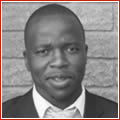 Author: Kudzani Ndlovu
Part-time lecturer, Lupane State University, Zimbabwe
On 8 and 9 February 2016 the pro-democracy movement in Swaziland converged at the High Court in Mbabane to attend a hearing on the constitutionality of the country’s two draconian and repressive laws – the Suppression of Terrorism Act No. 3 of 2008 (STA) and the British colonial era 1938 Sedition and Subversive Activities Act (Sedition Act) – which continue to be used by the state to stifle opposition and silence critics of the authoritarian monarchy.
Many, especially those outside Africa’s last absolute monarchy, had labelled this hearing as ‘historic’ but local activists remained less optimistic knowing that most of the country’s judges have sold their independence for thirty pieces of silver. The King’s influence in the appointment of judges has seriously undermined the independence of the judiciary. The Constitution of Swaziland provides that the judges are appointed by the King after consultation with the Judicial Service Commission (JSC). Judges are answerable to the King and hence they can never claim to be independent. It will only take rabid denialists and anarchists to argue that there is hope of an independent judiciary in Swaziland under the current system.
Freedom of expression under attack in Swaziland
Posted: 7 October, 2014 Filed under: Kudzani Ndlovu | Tags: Bheki Makhubu, constitution, control of the media, dissent, freedom of expression, human rights, journalism, journalist, Swaziland, Thulani Maseko 2 CommentsAuthor: Kudzani Ndlovu
Intern, Katiba Institute, Nairobi, Kenya; MPhil candidate, Centre for Human Rights, University of Pretoria
The recent arrest and imprisonment of The Nation magazine editor, Bheki Makhubu and Thulani Maseko, a human rights lawyer and the magazine’s columnist for contempt of court, while shocking the world, has exposed the government’s malevolent desire to suppress freedom of expression and crash dissent.
The two, who were arrested after publishing articles questioning the detention without trial of a government vehicle inspector, have subsequently been sentenced to an effective two years in prison.
Swaziland’s Constitution of 2005 clearly provides for freedom of expression in section 24. It stipulates that every person has a right of freedom of expression and opinion. Harassment, torture, incarceration of journalists or any other attempts to suppress free speech is a violation of this constitutionally guaranteed right.
The incarceration of the two is not an isolated incident but rather a highlight of the repressive regime’s longstanding intention to suppress freedom of expression. To understand Swaziland’s lack of freedom of expression it is important to look into the country’s media landscape. The government has maintained a tight grip on the media so as to control the information being disseminated while the few ‘independent’ media outlets have been constantly attacked leading to unprecedented levels of self-censorship.
The jeopardy of rule of law; democracy; separation of power and fundamental human rights in Swaziland
Posted: 14 May, 2014 Filed under: Njiti Lucius Batty | Tags: Bheki Makubhu, Centre for Human Rights, freedom of expression, freedom of media, National Magazine Editor, right to bail, right to liberty, right to work, rule of law, separation of power, Swaziland, Thulani Maseko, wrongful arrests 1 Comment Author: Njiti Lucius Batty
Candidate Advocate, High Court of Tanzania; Tutorial Assistant and Coordinator, University of Dodoma Law Society & Moot Court, Tanzania
Swaziland is the only absolute and pure monarchical country in Africa and has no multi-party system and Ingenyama, the King himself enjoys absolute powers over the executive and he is assisted by the traditional prime minister and official prime minister.
This article portrays the real story on the way rule of law; democracy; separation of power and fundamental human rights in Swaziland are at risk.
In January 2014, Bhantshana Gwebu, the Government Chief Vehicle Inspector of Swaziland was arrested basing on the reason that Gwebu had stopped the vehicle which chauffeured Esther Ota, one of the judges of High Court in the land.
This incidence instigated the minds of both Thulani Maseko, human rights lawyer, activist & the alumnus of the Centre for Human Rights, University of Pretoria in South Africa and Bheki Makubhu, the National Magazine Editor who published the article in National Magazine criticising the whole matter of arresting Gwebu. The article stated only the truth that the Vehicle Inspector was implementing his official roles thus it was unbecoming to arrest him and it was unconstitutional. And no one is above the law and for this case respect of traffic laws had to be followed.
Owing to that article, Maseko and Makhubu were arrested on March 18, 2014 and detained in custody for 20 days as result of the arrest warrant issued by the Chief Justice of Swaziland, Michael Ramodibedi who is also a judge in Lesotho.
 AfricLaw