
Spotlighting ACHPR Resolution 522: Protecting Women Against Digital Violence in Africa
Posted: 11 December, 2024 Filed under: Hlengiwe Dube | Tags: 16 Days of Activism against Gender-Based Violence, ACHPR Resolution 522, Africa, Cultural and social norms, cultural norms, cyberstalking, digital gender gap, Digital Violence, doxxing, gender inequality, gender-based violence, gender-sensitive media literacy, harmful surveillance laws, online harassment, social media platforms, violence against women, women’s rights Leave a comment Author: Hlengiwe Dube
Centre for Human Rights, University of Pretoria
The rise of digital technology has reshaped the world in various ways. While it has promoted progress in communication, education, and economic empowerment, it has also given rise to new forms of gender-based violence. In particular, women in Africa face unique challenges in the digital space, where digital violence, such as cyberstalking, online harassment, and the non-consensual sharing of intimate images, is becoming increasingly prevalent. In response to this growing issue, the African Commission on Human and Peoples’ Rights (ACHPR) adopted a landmark resolution in 2022 aimed at addressing the protection of women from digital violence. This resolution (ACHPR/Res. 522 (LXXII) 2022) is an important step in ensuring that women’s rights are upheld in the digital realm, as part of the broader agenda of combating gender-based violence.
As the world marks the 16 Days of Activism Against Gender-Based Violence, it is essential to reflect on the urgency and significance of this resolution and the broader issue of digital violence against women. This article examines the significance of the resolution for women’s rights in Africa, and outlines relevant actions required to combat digital violence.
The growing threat of digital violence in Africa
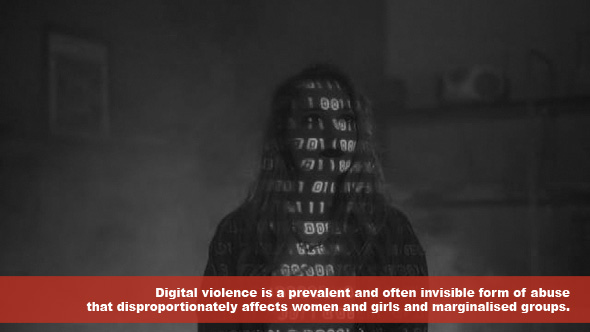
Digital violence is a prevalent and often invisible form of abuse that disproportionately affects women and girls and marginalised groups. Women who access the internet in Africa are at an increased risk of facing online violence, which includes cyberstalking, doxxing, online harassment, non-consensual distribution of sexually explicit images or videos, and cyberbullying. These harmful acts invade women’s privacy and can also cause significant psychological, emotional, and social harm. In Africa, where access to digital technologies is rapidly expanding, the challenges are compounded by cultural norms, gender inequality, and the lack of comprehensive legal frameworks to protect women in the digital space.
The resolution adopted by the ACHPR in 2022 highlights the urgency of addressing the threat of digital violence. The growing use of the internet and social media platforms in Africa has created new spaces for gender-based violence, which require a specific, tailored response from African states.
Key provisions of the resolution
The resolution is aimed at ensuring that women’s rights are upheld in both physical and virtual spaces, emphasising the Commission’s commitment to safeguarding women’s rights in the face of evolving challenges of the digital age. Its key provisions include:
1. Expanding the definition of gender-based violence
The resolution calls on African states to review and adopt legislation that broadens the definition of gender-based violence to explicitly include forms of digital violence. The Commission emphasises that cyber-harassment, cyberstalking, sexist hate speech, and other ICT-related violations should be recognised as part of the broader spectrum of violence that women face. This expansion is critical because digital violence often manifests in subtle yet harmful ways that may not always be covered by traditional definitions of GBV.
2. Research and data collection on digital violence
One of the key recommendations of the resolution is for states to undertake research on digital violence against women. This research should focus on gathering data, adjusting crime statistics, and identifying legislative and non-legislative gaps in the protection of women. Understanding the scope of digital violence is essential for formulating effective policies and interventions.
3. Awareness-raising and education
The resolution stresses the importance of awareness-raising programmes targeting boys and men, as well as broader campaigns involving various stakeholders. These initiatives are intended to address the root causes of digital violence within the broader context of gender-based violence. Shifting social and cultural attitudes, eliminating gender norms, and promoting respect for women in the online space are critical to tackling the problem of digital violence.
The resolution also emphasises the need for education to remove the digital gender gap. Empowering women with access to education in digital technology fields and promoting their participation in the tech sector can help reduce vulnerabilities and create opportunities for women in digital spaces.
4. Training for professionals
Another essential component of the resolution is the recommendation for mandatory and continuous training for professionals who deal with victims of digital violence. Law enforcement authorities, social and healthcare staff, criminal justice actors, and members of the judiciary should be adequately trained to handle cases of digital violence in a sensitive and gender-responsive manner. This ensures that victims receive the support they need while perpetrators are held accountable.
5. Cooperation between authorities and service providers
The resolution also calls for improved cooperation between law enforcement authorities and service providers, such as internet service providers and social media platforms. Effective collaboration is essential for identifying perpetrators, gathering evidence, and ensuring that victims receive timely and appropriate support.
6. Safeguarding women journalists
Women journalists are particularly vulnerable to digital violence, including online harassment, threats, and doxxing. The resolution highlights the need for gender-sensitive media literacy and digital security training for women journalists. These measures are essential for ensuring that women in the media are protected from digital violence while continuing to contribute to the free flow of information.
7. Repealing harmful surveillance laws
The resolution calls for the repeal of vague and overly broad laws on surveillance, which can contribute to the vulnerability of female journalists and other women. Such laws often exacerbate the risks of digital violence by allowing unchecked surveillance and invasion of privacy. Ensuring that digital security laws are clear, proportionate, and gender-sensitive is central to protecting women’s rights online.
Challenges and opportunities
While the resolution provides a strong framework for addressing digital violence, there are several challenges that must be overcome for its successful implementation.
1. Legal and policy gaps
One of the primary challenges is the lack of comprehensive legal frameworks in many African countries to address digital violence. Although some countries have taken steps to legislate against cybercrime and digital violence, there are gaps in ensuring these laws are comprehensive and adequately protect women. The adoption of the resolution provides an opportunity for African countries to harmonise their legal frameworks and establish clearer, more effective laws to address digital violence.
2. Cultural and social norms
In many African societies, deeply entrenched cultural and social norms, anchored on patriarchal values, contribute to offline and online gender-based violence. Tackling digital violence requires addressing these root causes by shifting attitudes toward women and promoting gender equality in all spheres of life, including the digital realm. Public awareness campaigns and educational programmes are essential in changing the narratives around women’s rights and digital spaces.
3. Implementation and enforcement
Even when laws are enacted, enforcement remains a significant challenge. Many African countries face issues such as limited resources, inadequate training for law enforcement, and inconsistent application of the law. Ensuring that laws against digital violence are enforced effectively will require significant investment in training, capacity building, and international cooperation.
The Way Forward
As a demonstration for its continued commitment to addressing digital violence against women in Africa, the African Commission adopted a subsequent resolution (ACHPR/Res.591 (LXXX) on the need to undertake a study on digital violence against women’s rights in Africa. Acknowledging the critical need for more comprehensive data, the Commission committed to conducting a continental study to examine the causes, manifestations, and impacts of digital violence against women in Africa. This study, led by the Special Rapporteurs on the Rights of Women and on Freedom of Expression and Access to Information, aims to gather essential evidence and provide the necessary insights to develop norms and standards that will guide African States in combating digital violence. The resolution calls for the active cooperation of all stakeholders to ensure the success of this vital research, reinforcing the Commission’s dedication to creating an informed, effective response to this pressing issue.
As we commemorate the 16 Days of Activism Against Gender-Based Violence, it is important to remember that the fight against gender-based violence in Africa cannot be limited to traditional spaces. Digital violence is a growing and insidious threat that requires urgent and sustained action. The ACHPR resolutions on the protection of women against digital violence represent a significant step in the right direction, but much work remains to be done.
African governments must take immediate steps to adopt and enforce the recommendations outlined in the resolution. This includes updating legal frameworks, investing in research, and promoting awareness about the dangers of digital violence. Civil society organisations, media, and tech companies should also contribute to robustly combating digital violence by raising awareness, providing support to victims, and holding perpetrators accountable.
As the digital world continues to evolve, so too must our efforts to protect women’s rights. The ACHPR/Res. 522 (LXXII) 2022 is an essential tool in ensuring that African women are safe, respected, and empowered in the digital age. It is time for all stakeholders to work together to make digital spaces safer for women, promoting gender equality and human rights for all.
About the Author:
Hlengiwe Dube is an expert on information rights including freedom of expression, access to information and data protection, complemented by strong expertise of technology’s intersection with human rights. She is finalising her doctoral studies focusing on the complex dynamics of state surveillance in the context of human rights and public security. She is based at the Centre for Human Rights, University of Pretoria as a Project Manager of the Expression, Information and Digital Rights Unit, overseeing initiatives that span freedom of expression, access to information, data protection, elections, digital rights, and related themes at the nexus of democracy, technology, and human rights. Hlengiwe also extends her expertise to provide technical assistance to the African Commission on Human and Peoples’ Rights (ACHPR) special mechanisms on digital and information rights issues. She holds a Master’s Degree in Human Rights and Democratization in Africa, further underpinning her depth of knowledge and commitment to advancing human rights discourse, particularly in the digital age.
 AfricLaw