
Re-establishing the UN Special Committee Against Apartheid, this time in respect of the State of Palestine
Posted: 26 November, 2024 Filed under: Jaymion Hendricks, Yeabsira Teferi | Tags: apartheid, Committee on the Elimination on Racial Discrimination, discriminatory practices, International Convention on the Elimination of Racial Discrimination, International Court of Justice, international law, military checkpoints, Occupied Palestinian Territory, oppression, racial segregation, roadblocks, Rome Statute, Special Committee against Apartheid, State of Israel, this time in respect of the State of Palestine, unlawful Leave a comment Author: Jaymion Hendricks
Legal Advisor, International Law
In its landmark advisory opinion on 19 July 2024, the International Court of Justice (“ICJ”/ “the Court”) held that the State of Israel’s continued presence in the Occupied Palestinian Territory (OPT) is unlawful under international law. Of particular importance was the Court’s finding that Israel is violating Article 3 of the International Convention on the Elimination of Racial Discrimination (‘CERD’), which holds that “States Parties particularly condemn racial segregation and apartheid and undertake to prevent, prohibit and eradicate all practices of this nature in territories under their jurisdiction”.
In its written statement in the ICJ advisory proceedings, South Africa proposed re-establishing the Special Committee against Apartheid to examine the discriminatory practices and laws which Israel applies in the Occupied Palestinian Territories. In 1962, the General Assembly created a Special Committee to investigate and address apartheid South Africa’s system of racial segregation and oppression. Over time, the Special Committee on South Africa helped shape a coordinated international response which included economic sanctions, arms embargoes, and the diplomatic isolation of South Africa which contributed to the adoption of the International Convention on the Suppression and Punishment of the Crime of Apartheid (“Apartheid Convention’’) in 1973. The Special Committee was terminated by UN resolution on 23 June 1994 after South Africa transitioned to democracy, bringing to an end its apartheid regime.
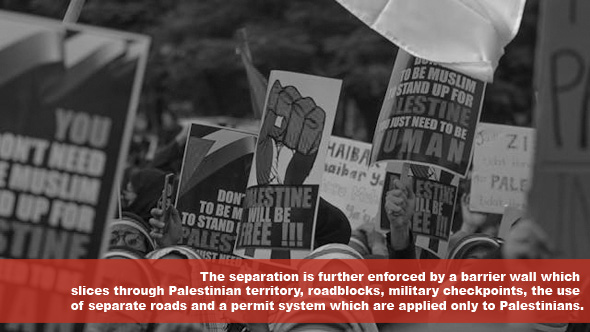
In 2020, the Committee on the Elimination on Racial Discrimination reported that there are two entirely separate legal systems and sets of institutions for Jewish communities in illegal settlements on the one hand, and Palestinian populations living in Palestinian towns and villages on the other. The separation is further enforced by a barrier wall which slices through Palestinian territory, roadblocks, military checkpoints, the use of separate roads and a permit system which are applied only to Palestinians.
It was hoped that the ICJ would define the crime of apartheid as it appears in Article 3 of CERD. The definition of apartheid is found in two widely ratified treaties, namely, the Apartheid Convention and the Rome Statute of the International Criminal Court (“Rome Statute”) which consider apartheid to constitute a crime against humanity. It bears noting that while Israel is a State Party to CERD, it has not ratified the Apartheid Convention nor is it a Party to the Rome Statute. It therefore believed that the Court would seize the opportunity to articulate the meaning of apartheid in a treaty to which Israel is bound, namely, CERD.
The reference to Article 3 of CERD in the advisory opinion led to differing opinions among the ICJ judges. ICJ President Salam and Judge Tladi interpreted the reference to mean that Israel’s policies and practices violate the prohibition of apartheid . In contrast, Judge Iwasawa in her separate declaration held that the Court emphasised the “separation” implemented by Israel in the West Bank between the Palestinian population and Israeli settlers, “without qualifying it as apartheid”, as “…applying the concept of apartheid to Israeli policies and practices in the Occupied Palestinian Territory is no easy task, particularly because there is no universally accepted definition of apartheid”.
Given South Africa and Namibia’s lived experiences under apartheid, both countries’ written statements to the Court argued that the definition of apartheid as found in the Apartheid Convention and Rome Statute should inform the interpretation of Article 3 of CERD as a supplementary means of interpretation pursuant to Article 32 of the Vienna Convention on the Law of Treaties. Ultimately, the Court did not address this and it is now up to the United Nations to assess Israel’s violation of Article 3 of CERD and to hold it accountable.
Following the ICJ’s advisory opinion, the UN General Assembly adopted Resolution A/ES-10/24 on 19 September 2024, which, inter alia, welcomed the ICJ’s advisory opinion and called on Israel to fulfil its international law obligations. The resolution requests the Secretary-General, in consultation with Member States with relevant experience and expertise, to present proposals for establishing a mechanism to monitor Israel’s violations of Article 3 of the CERD as identified by the ICJ in its advisory opinion.
In the case of Palestine, the mandate of the mechanism proposed by the General Assembly could be similar to the Special Committee which was established for South Africa, which would allow it to review the racial policies and practices of Israel and to report periodically to the UN Security Council and the General Assembly. The re-constituted Special Committee should further investigate the potential consequences for Third States if their acts or omissions are furthering the systematic segregation and racial discrimination to which Palestinians are subjected in the OPT. Precise modalities on the form and mandate of any mechanism are yet to be determined.
As was the case with the Special Committee on South Africa, some Western States may be opposed to its establishment with regards to Palestine. This could be overcome if the widest support is mobilised especially among Global South countries. The obligation to end apartheid is one owed to the international community, and especially for those who have and continue to suffer under it.
About the Author:
Jaymion Hendricks is an attorney specialising in international law. He holds an LL.B, BA International Studies (University of Stellenbosch) and LL.M. International Air, Space and Telecommunications Law (University of Pretoria). He writes in his personal capacity.
 AfricLaw