
Swiping Right or Wrong? The Risks of Digital Romance for Women’s Rights
Posted: 4 September, 2024 Filed under: Hlengiwe Dube | Tags: African context, challenges, compatible matches, cyberstalking, digital harassment, digital revolution, digital romance, digital technology, discrimination, identity theft, mental health, non-consensual sharing of personal information, online dating platforms, personal data, Privacy Concerns, romance, safety, smartphones, social boundaries, social media, social media networks, targeted harassment, unwanted attention, women’s rights Leave a comment Author: Hlengiwe Dube
Centre for Human Rights, University of Pretoria
Introduction
In the age of digital technology, where smartphones and social media have revolutionised communication across the globe, the landscape of romance has experienced profound shifts, especially within the African context. The rise of online dating platforms and social media networks has introduced unprecedented opportunities for connection, allowing individuals to meet potential partners beyond traditional geographical and social boundaries. However, this digital revolution also brings to light a series of challenges, particularly in terms of women’s rights and safety. In many societies, gender dynamics often intersect with technology use, and consequently, women face specific issues related to privacy breaches, non-consensual sharing of personal information, and digital harassment. The potential for exploitation in online spaces further exacerbate concerns about consent and equality. This article explores the negative repercussions of digital romance on women’s rights, critically examining how these new technological avenues can both empower and endanger women, thereby highlighting the urgent need for digital literacy, robust legal frameworks, and gender sensitive interventions to ensure a safer and more equitable online environment.
Privacy Concerns
One of the most pressing concerns in digital romance is the erosion of privacy. Online dating platforms and social media networks are designed to facilitate connections but often require users to divulge a significant amount of personal information to create profiles or engage in interactions. This data, while intended to help users find compatible matches, can be misused or exposed in ways that seriously compromise women’s safety and privacy. For example, personal data can be harvested for malicious purposes such as identity theft, cyberstalking, or targeted harassment. Once this sensitive information is in the public domain, it becomes vulnerable to exploitation by individuals with harmful intentions.
The constant culture of sharing and oversharing on social media also compounds these risks. Women, in particular, are often at a higher risk of encountering unwanted attention or harassment due to the visibility of their personal details. The sharing of seemingly innocuous information—like locations, photographs, or relationship statuses—can inadvertently expose women to threats. Such information, once posted, becomes accessible to a vast audience, including potential predators who may exploit this data to invade personal boundaries. This can lead to experiences of stalking or coercion, further eroding women’s sense of security and privacy. The pervasive nature of digital interactions often means that personal data is not just shared but is also vulnerable to breaches, making it essential for women to be vigilant about their digital footprints and the potential ramifications of their online presence.
Consent and Coercion
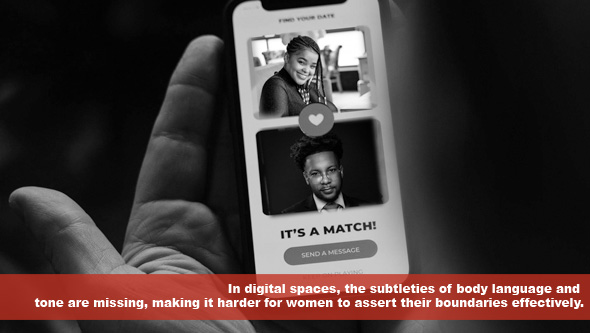
Digital romance presents complex challenges to the fundamental concept of consent. Unlike face-to-face interactions where verbal and physical cues provide clarity, online communications often lack these nuanced signals, leading to frequent misunderstandings about consent. In digital spaces, the subtleties of body language and tone are missing, making it harder for women to assert their boundaries effectively. This can result in situations where consent is ambiguously communicated or ignored altogether, leaving women vulnerable to unwanted advances or pressure. The inherent pressure to respond to messages or continue conversations in online settings can sometimes morph into coercion, where women feel obligated to engage or acquiesce even when they are uncomfortable.
The anonymity and distance afforded by digital platforms can further exacerbate these issues. Perpetrators of harassment or coercion might feel emboldened by the perceived lack of immediate consequences or accountability. The digital veil creates a false sense of security for those who seek to exploit or manipulate others, making it easier for them to engage in predatory behaviour. This dynamic not only undermines women’s autonomy but also creates an environment where manipulation and exploitation can thrive. Women may find themselves navigating complex social interactions where their ability to freely and clearly consent is compromised, leading to experiences that can have lasting emotional and psychological impacts. The digital landscape thus necessitates a more robust understanding of consent, emphasising the need for clear, affirmative, and ongoing communication to protect women’s rights and dignity in online romance.
Gendered Harassment and Discrimination
Digital romance platforms are not isolated from broader societal issues of gender discrimination and harassment; in fact, they often mirror and magnify these problems. Women frequently encounter gendered harassment in online dating environments, including unsolicited explicit messages, objectification, and derogatory remarks. Such behaviour not only undermines women’s dignity but also fosters an atmosphere where they may feel unsafe, devalued, or demeaned. The anonymity of digital interactions can embolden some individuals to engage in abusive or inappropriate conduct that they might avoid in face-to-face encounters, thereby amplifying the negative impact on women’s well-being.
Moreover, the design and algorithms of many dating apps can inadvertently perpetuate gender biases and reinforce traditional gender roles. These platforms often incorporate features and sorting mechanisms that can disadvantage women, subjecting them to stricter standards and heightened scrutiny compared to their male counterparts. For example, women may face more pressure to present themselves in a way that conforms to conventional beauty standards or to navigate a higher volume of inappropriate messages and advances. This systemic bias in the design and operation of dating apps can skew the dating experience, making it less equitable and more fraught with challenges for women. By reinforcing traditional gender expectations and limiting opportunities for women to engage on their own terms, these platforms contribute to a cycle of discrimination that undermines progress toward gender equality.
Impact on Mental Health
The negative impact of digital romance extends to women’s mental health as well. The impact is profound and multifaceted, often resulting in significant psychological distress. Women face the challenge of curating an appealing online persona that aligns with societal expectations while grappling with the anxiety of meeting unrealistic standards. This relentless pursuit of digital validation can induce chronic stress, a sense of inadequacy, and heightened anxiety. These negative interactions and the complexity of online dating dynamics contribute to significant emotional strain. Women may experience feelings of isolation and emotional exhaustion due to managing unwanted advances and coercive behaviour. Over time, these pressures can lead to serious mental health issues such as depression and chronic anxiety. The digital realm, intended to facilitate connections, often becomes a source of emotional burden. This calls for improved support systems and protective measures to ensure safer online environments for women.
Legal and Regulatory Challenges
Addressing the negative impact of digital romance on women’s rights necessitates a comprehensive approach that includes revisiting and reforming legal and regulatory frameworks. Particularly in Africa, existing laws often lag behind the rapidly evolving digital landscape, leaving significant gaps in protection against issues like cyberstalking and online harassment. For instance, traditional legal frameworks may not fully encompass the nuances of online abuse or provide adequate remedies for victims of digital harassment, resulting in insufficient legal recourse for women facing such challenges. The lack of specific legislation addressing cyberstalking and targeted online harassment means that many women are left vulnerable to persistent abuse without effective legal recourse.
Moving Forward
To mitigate the negative impacts of digital romance on women’s rights, several measures can be taken, including:
- Revise legal frameworks to address digital interactions, protect women’s rights online, and ensure robust reforms and enforcement.
- Enhance privacy controls and data protection on digital platforms to better safeguard women’s personal information.
- Implement clearer guidelines and tools for users to understand and communicate consent, ensuring interactions are respectful and consensual.
- Develop more robust mechanisms for reporting and addressing harassment on digital platforms.
- Combat gender discrimination and promote gender equality in digital spaces to enhance women’s experiences in the digital environment.
Conclusion
While digital romance offers new possibilities for connection and companionship, it also brings significant challenges that impact women’s rights and safety. By recognising and addressing these issues, we can work towards creating a digital landscape that upholds and safeguards the rights of all individuals, ensuring that digital romance is a positive and equitable experience, ensuring that digital romance is a positive and equitable experience, and promoting a safer and more inclusive online space for women. Ultimately, these efforts will not only protect individual rights but also contribute to a more supportive and equitable digital community.
About the Author:
Hlengiwe Dube is an expert on information rights including freedom of expression, access to information and data protection, complemented by strong expertise of technology’s intersection with human rights. She is finalising her doctoral studies focusing on the complex dynamics of state surveillance in the context of human rights and public security. She is based at the Centre for Human Rights, University of Pretoria as a Project Manager of the Expression, Information and Digital Rights Unit, overseeing initiatives that span freedom of expression, access to information, data protection, elections, digital rights, and related themes at the nexus of democracy, technology, and human rights. Hlengiwe also extends her expertise to provide technical assistance to the African Commission on Human and Peoples’ Rights (ACHPR) special mechanisms on digital and information rights issues. She holds a Master’s Degree in Human Rights and Democratization in Africa, further underpinning her depth of knowledge and commitment to advancing human rights discourse, particularly in the digital age.
 AfricLaw