
Enhancing Access to Information through Community Media in South Africa
Posted: 28 August, 2024 Filed under: Hlengiwe Dube | Tags: Access to Information, accessibility, accurate information, community broadcasters, Community Media, cultural practices, Declaration of Principles on Freedom of Expression and Access to Information in Africa, democratic participation, diversity, essential information, inclusivity, informed decision-making, International Federation of Journalists, linguistic preferences, local issues, mainstream media, religious information, right to freedom of expression, South Africa Leave a comment Author: Hlengiwe Dube
Centre for Human Rights, University of Pretoria
Introduction
South Africa’s community media sector plays a crucial role in addressing the diverse needs and interests of its various geographic and interest-based communities by ensuring access to relevant and accurate information. These media outlets are dedicated to developing and disseminating content that reflects local issues, cultural practices, and linguistic preferences. This localised approach ensures that content is tailored to the immediate needs and interests of specific communities, which is vital for community engagement and empowerment. By focusing on the specific concerns and interests of their audiences, community media provides essential information that might not be covered by mainstream media, reinforcing the public’s right to access crucial information. This access supports informed decision-making and strengthens local identity, promoting active civic participation and contributing to the overall resilience and cohesion of the community.
International standards for community media highlight the importance of diversity, inclusivity, and accessibility. The 2019 Declaration of Principles on Freedom of Expression and Access to Information in Africa (the 2019 Declaration) emphasises the importance of supporting community media as independent, non-profit entities dedicated to serving the interests of local or culturally shared communities. States are urged to promote the development of such media by ensuring that their ownership, management, and programming are truly representative of the communities they serve. Licensing for community broadcasters should be straightforward, efficient, and affordable, promoting genuine community involvement while avoiding restrictive conditions. Additionally, states should allocate a designated percentage of the radio frequency spectrum to community broadcasters to enhance diversity and inclusivity in media representation. Similarly, international organisations such as the United Nations Educational, Scientific and Cultural Organization (UNESCO) and the International Federation of Journalists (IFJ) advocate for community media that reflect a wide range of voices, including marginalised and minority groups. They also promote key benchmarks including ensuring equitable access to media resources, promoting local content that addresses the specific needs and interests of communities, and safeguarding freedom of expression.
Access to Information
Community media plays a pivotal role in promoting access to information, ensuring that all individuals, regardless of their geographic location, socio-economic status, or cultural background, can exercise their right to freedom of expression and access to information. This is a principle established in the 2019 Declaration, and other international standards that promote media diversity. By focusing on localised content and addressing community-specific issues, these media outlets provide crucial information that might otherwise be overlooked by mainstream media. For example, information on agricultural advice and local health updates are vital for residents in rural areas. This localised dissemination of information empowers community members to make informed decisions about their daily lives, from managing environmental and health conditions to understanding local development projects. By bridging the information gap in underserved areas, community media upholds the fundamental right to access relevant and timely information.
Contribution to Public Discourse and Participation
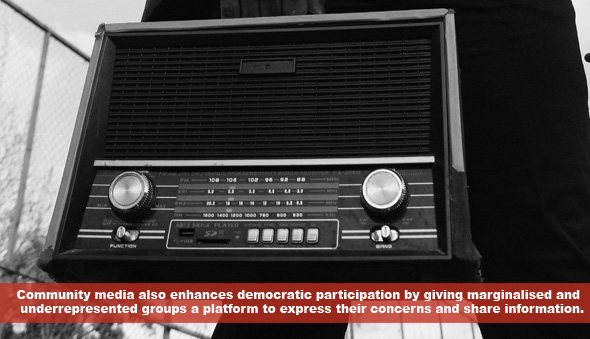
Community media also enhances democratic participation by giving marginalised and underrepresented groups a platform to express their concerns and share information. Stations such as Radio Zibonele in Khayelitsha and Bush Radio in Cape Town facilitate discussions on social justice, human rights, and local governance, enabling community members to engage with and influence public policies. From Radio Zibonele broadcasting, residents in Khayelitsha benefit from a range of programs, including talk shows that address local concerns such as health, education, and social issues, as well as music and cultural programming that resonates with the community’s preferences. Bush Radio, one of the oldest community radio stations in South Africa, offers a wide range of programming, including news, talk shows, and educational content and emphasises issues such as youth development, gender equality, and social justice, reflecting the diverse needs of Cape Town’s multicultural population. Vuka FM, based in the Eastern Cape, also caters to rural and peri-urban communities with programming that highlights local development projects. The Southern Courier covers news and events in the southern suburbs of Johannesburg, providing a platform for local voices and issues that might not receive attention in mainstream media such as local government decisions to community activities. These platforms provide an essential service by broadcasting news and information that directly impacts their audiences, including details about local government decisions, community events, and rights-related issues. This approach not only supports transparency and accountability but also ensures that all voices are heard, thus reinforcing the right to freedom of expression and access to information without distinction. By promoting an inclusive media environment, community media strengthens democratic processes and contributes to a more informed and active citizenry.
Moutse Community Radio is crucial to the Moutse area, in Mpumalanga, offering programming tailored to the community’s specific needs and interests. It provides local news, agricultural updates, and a range of content that highlights community events, cultural celebrations, and educational initiatives. By delivering timely information and supporting local agriculture, the station enhances the region’s economy and keeps residents engaged. Its content reflects the diverse voices of the community, cultivating a strong sense of local identity and cohesion. Through its focused and inclusive approach, Moutse community Radio not only informs and empowers residents but also strengthens community ties and improves overall quality of life, highlighting the value of local media in nurturing vibrant, connected communities. In a similar manner, Community Radio Ehlanzeni, also in Mpumalanga focuses on serving the Ehlanzeni District with programming that includes local news, cultural shows, and health education. The station broadcasts in both English and local languages such as SiSwati and Xitsonga, making its content accessible to a wide audience. By addressing health issues, such as HIV/AIDS awareness and preventative measures, Community Radio Ehlanzeni plays a critical role in educating and informing its listeners, thereby contributing to public health and well-being while celebrating the region’s cultural diversity.
Community media also cater to specific cultural and linguistic groups, supporting the preservation and promotion of cultural heritage. By providing content in isiXhosa and featuring discussions on matters affecting daily life in Khayelitsha, Radio Zibonele strengthens community bonds and ensures that the media reflects the lived experiences of its audience. Similarly, Radio Bop broadcasts in Setswana and serves the communities in the North West Province. The station’s programming includes traditional music, cultural discussions, and news relevant to Setswana-speaking listeners. This focus helps to maintain cultural practices and language while providing a platform for local artists and cultural events, thus promoting cultural pride and continuity within the community. South Africa’s community media sector is also integral to reflecting the country’s diverse demographic landscape through localised content that resonates with specific communities. One notable example is Limpopo FM, which serves the Limpopo Province with programming in Sepedi. The station broadcasts a variety of content, including local news, traditional music, and community announcements. By focusing on issues pertinent to the Limpopo region, such as agricultural developments and local governance, Limpopo FM helps bridge the gap between the public and essential services, thereby promoting local engagement and ensuring that regional concerns are addressed.
Access to religious information
On the religious front, Community radio plays a vital role in providing access to religious information and catering to the diverse spiritual needs of listeners across various faiths. In Gauteng, Radio Islam exemplifies this by offering content that serves the Muslim community, including Quranic recitations, Islamic teachings, and discussions on social issues from an Islamic perspective. This programming not only addresses spiritual needs but also strengthens cultural identity and promotes understanding of Islamic values within the broader public sphere. Similarly, other community radio stations support various religious communities: Christian Voice offers gospel music, Bible study programs, and local sermons, promoting spiritual growth and community involvement; Radio Zindagi provides content on Hindu festivals, spiritual discourses, and devotional music, connecting listeners with Hindu traditions; Jewish Radio Network includes Hebrew language classes, Torah study, and discussions on Jewish laws and holidays, aiding in religious practice and cultural education; Radio Dharma features Buddhist teachings, guided meditations, and discussions on Buddhist philosophy, helping listeners incorporate mindfulness into their lives; and Radio Khalsa offers kirtan, readings from the Guru Granth Sahib, and discussions on Sikh values, preserving Sikh traditions and providing spiritual guidance. These examples illustrate how community radio enriches the spiritual lives of its diverse audience, enhances engagement with religious practices, and supports cultural and religious education.
Impact of the digital age
Community media in South Africa have increasingly embraced digital technologies to expand their reach and enhance their services. The digitisation of community media has allowed local radio stations, newspapers, and online platforms to connect with audiences beyond traditional broadcast boundaries. By establishing websites, social media profiles, and mobile apps, these media outlets can deliver real-time news, interact with listeners and readers, and offer multimedia content such as videos and podcasts. This digital transition has enabled community media to cater to a younger, tech-savvy audience while also providing crucial information and updates on various issues, including local events, health initiatives, and agricultural developments. However, the digital age has also highlighted the issue of the digital divide, which impacts community media’s effectiveness and reach. While digitisation offers numerous benefits, it also risks exacerbating existing inequalities, particularly in rural and underserved areas where access to reliable internet and digital devices is limited. Many residents in these areas may find it challenging to access online content due to infrastructural constraints, which can hinder their ability to benefit from the expanded services of digital community media. Addressing the digital divide remains a critical challenge, as ensuring equitable access to digital resources is essential for community media to fully realise its potential in promoting inclusive and engaged communities.
Conclusion
South Africa’s community media outlets are crucial in enriching public discourse and promoting inclusivity by delivering content that reflects the diverse interests and needs of various geographic and cultural communities. These outlets, from regional radio stations to digital platforms, address local issues, promote cultural heritage, and drive social change, significantly contributing to a more representative media landscape. The digital age has enhanced their ability to engage audiences through real-time updates and interactive features, expanding their reach. However, the digital divide remains a significant challenge, potentially restricting access to these vital resources for underserved and rural populations. Access to credible information through community media is essential for maintaining an informed and empowered populace, as these outlets serve as trusted sources of local news and updates, ensuring that all voices are heard and that public engagement and activism are supported, despite the barriers posed by unequal digital access. Embracing and supporting community media is essential for ensuring that the principles of access to information and inclusive communication continue to thrive, thereby reinforcing the core values of information rights enshrined in international human rights law and standards such as the African Charter on Human and Peoples’ Rights and soft law instruments such as the Model Law on Access to Information for Africa, the 2019 Declaration and the Guidelines on Access to Information and elections in Africa.
About the Author:
Hlengiwe Dube is a PhD candidate and Project Coordinator of the Centre for Human Rights’ Democracy, Transparency and Digital Rights Unit. She holds an MPhil in Human Rights and Democratisation in Africa from the Centre for Human Rights, University of Pretoria.
 AfricLaw