
Integrating gender-inclusive approaches in transitional justice processes in Africa
Posted: 26 February, 2024 Filed under: Mary Izobo | Tags: African countries, conflict-related sexual violence, displacement, diverse sexual orientations, empowerment, enforced disappearances, femicide, forced marriages, gender identities, gender norms, gender perspectives, gender-inclusive approaches, human rights violations, patriarchal systems, rights of women and girls, societal transformation, socio-economic discrimination, Transitional Justice, unconstitutional changes Leave a comment Author: Mary Izobo
International Human Rights Lawyer, Gender Equality Advocate and Governance Expert
During conflict, gender perspectives reveal the divergent impacts felt by all individuals –women, men, vulnerable and marginalised people, and those with diverse sexual orientations and gender identities. As a result, transitional justice in African countries must not only acknowledge but also actively engage with these gendered realities, particularly focusing on the experiences of women and girls. In the pursuit of reconciliation and healing, it is crucial to recognize the unique impact of conflicts on women and girls, exacerbated by patriarchal systems. By embracing gender-inclusive approaches within transitional justice, we pave the path towards a fairer, more inclusive society for all.
Transitional justice mechanisms must be characterised by their adaptability, rejecting the one-size-fits-all model in favour of context-specific solutions that resonate with the intricacies of society. By placing women’s and girls’ experiences at the forefront, these mechanisms can effectively challenge entrenched gender norms and pave the way for a more equitable future.
Also, by mainstreaming gender as a cross-cutting issue, transitional justice can not only confront past injustices but also catalyse societal transformation. It provides a platform to interrogate complicity, address human rights violations, and ultimately foster a culture of accountability and empowerment for all individuals, particularly women and girls in Africa.
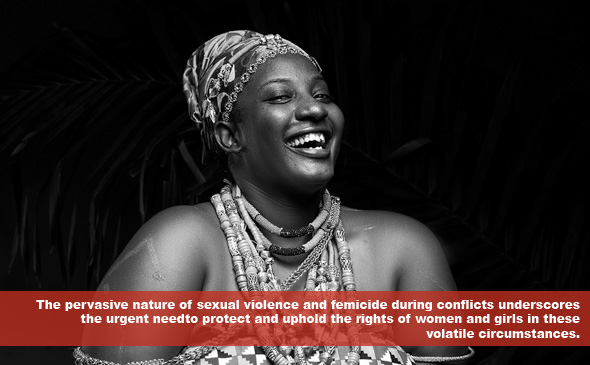
In recent years, the continent has witnessed a disturbing trend of coup d’états and unconstitutional changes in government in several countries, including Niger, Chad, Burkina Faso, Sudan, Guinea, and Mali. Regrettably, the resulting conflicts have exacerbated conflict-related sexual violence against women and girls, particularly in areas where the fighting is heavy and along transit routes. The pervasive nature of sexual violence and femicide during conflicts underscores the urgent need to protect and uphold the rights of women and girls in these volatile circumstances.
Jacqueline Mutere’s poignant question, “Why should a fight be played out on my body?” encapsulates the egregious nature of using women’s and girls’ bodies as battlegrounds during conflict. The devastating impact of conflict on women and girls is akin to the proverbial suffering of the grass when elephants engage in combat. From conflict-related sexual violence and physical assaults to forced marriages, socio-economic discrimination, displacement, enforced disappearances, poverty and trafficking, women and girls bear the brunt of wartime atrocities.
Collaborative efforts between the state, civil society organisations, gender experts and affected groups and individuals are crucial to designing and implementing gender-just transitional justice mechanisms. Active participation by women and girls empowers them to understand the complexities of conflict, identify challenges and shape transitional justice measures according to their unique experiences and needs.
Mainstreaming gender within transitional justice encompasses investigating the gendered nature of human rights violations, ensuring gender-inclusive and gender-sensitive language in foundational documents, establishing gender committees, and providing gender sensitivity training for personnel.
Transitional justice mechanisms should also develop and implement gender-responsive policies and frameworks that explicitly recognise and address the specific needs, experiences and rights of women and girls. This includes integrating gender perspectives into legal frameworks, policy documents and guidelines related to transitional justice.
Gender budgeting for reparations packages is vital to ensure equitable distribution and address the distinct needs of women and girls. On the other hand, institutional reforms should prioritise gender equality, including strengthening laws against gender-based violence, promoting equal representation of women in decision-making processes, and establishing specialised gender-focused units within government institutions.
Recognising the prevalence of sexual and gender-based violence, along with gender inequality, within conflict contexts is essential for fostering a comprehensive and inclusive approach to transitional justice. Furthermore, acknowledging the diverse impacts of conflicts based on gender, sexual orientation and identity underscores the importance of integrating feminist, masculinities and queer perspectives into transitional justice measures. Embracing this holistic understanding of gender dynamics enables tailored solutions that account for the specificities and complexities of each society, moving beyond a one-size-fits-all approach.
By mainstreaming gender as a cross-cutting issue through concrete policy and operational solutions, transitional justice processes can effectively address the need for justice and healing among all individuals affected by conflict. Through a steadfast commitment to understanding and redressing the gendered impacts of conflict, especially on women and girls, Africa can strive towards realising societies where justice, equality and dignity are upheld for all citizens, irrespective of gender.
About the Author:
Mary Izobo is an International Human Rights Lawyer, Gender Equality Advocate and Governance Expert. She possesses vast knowledge in the field of human rights, governance, democratization, and the rule of law for development as well as practical and diplomatic legal experience in statute drafting and electoral observation.
She is a 2023 Archbishop Desmond Tutu Leadership Fellow and a 2023 Alumnae of the International Visitors Leadership Programme of the United States of America Department of State. She is also a Barrister and Solicitor of the Supreme Court of Nigeria. She is the recipient of various academic awards and won various accolades in recognition of her work. Notably, Africa’s Top Legal Millennial – The Amazon of Women’s Rights, Kaduna State Honours Award for public service in Nigeria, SPE Top Pathfinder and Futurist Activist.
 AfricLaw