
Women’s month: A time of reflection
Posted: 29 August, 2023 Filed under: Tsholofelo Nakedi | Tags: apartheid system, brutal killings, celebration of women, discrimination against women, femicide, gender equality, health and safety of women, imbokodo, injustice, Laws and policies, passbook, racial segregation, safe spaces for women and girls, sexual offences, South Africa, violence against women, Women’s Month 1 Comment Author: Tsholofelo Nakedi
Community Advocacy Specialist
Throughout history, women have played a significant role in fighting injustices, with most of that role often downplayed by historians. Hence it is exciting to be part of a country like South Africa that has dedicated the month of August to celebrating women. Women’s Month marks the strength and resilience of women and their contribution to society. In addition, Women’s Month is an opportunity for South Africans to pay tribute to the generations of women also called imbokodo – the rock whose struggles laid the foundations for progress in empowering women and achieving gender equality. It also provides an opportunity to reflect on women’s and children’s experiences.
During the apartheid regime, the pass laws required South Africans defined as “black” under The Population Registration Act to carry an internal passport, known as a passbook. Failure to produce this document on demand resulted in a fine, imprisonment or both. Consequently, On 9 August 1956, 20 000 South African women marched to the Union Buildings in protest against the proposed amendments to the Urban Areas Act, which aimed to limit the rights of Africans to live in urban areas, further entrenching the apartheid system of racial segregation in South Africa. This valiant action by South African women is regarded as one of the greatest moments in history that demonstrated women’s leadership and willingness to fight injustice.
South African women have gone on to achieve extraordinary feats since then. Women continue to occupy positions of power they were previously denied. For example, South Africa had its first female vice president from 1999 to 2005, Phumzile Mlambo Ngcuka. Despite this, women remain among society’s most vulnerable, humiliated and exploited. With the high levels of violence against women and girls and alarming rates of femicide, women cannot fight this alone.
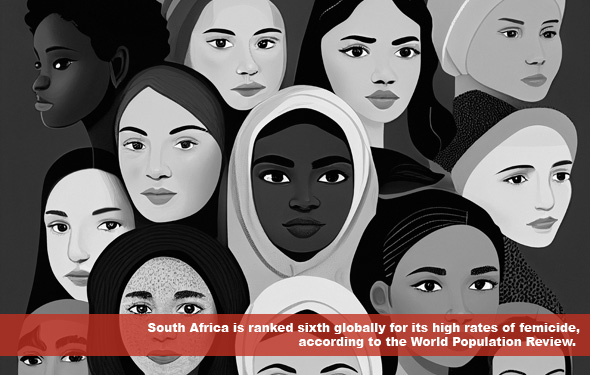
In a country like South Africa, women and girls continue to be killed daily by their intimate partners and relatives. Institutions that are supposed to be safe spaces for women and girls have become spaces used to perpetuate violence against women. In 2023, 969 women were killed, 1485 attempted murders aimed at women and 15,000 were assaulted in the first three months, according to the first quarterly SAPS stats for 2023, while the second quarter stats show a 2% decrease in sexual offences compared to the first quarter, but the stats remain alarming. South Africa is ranked sixth globally for its high rates of femicide, according to the World Population Review. While South Africa has put in place several laws and policies to put an end to systemic discrimination against women, the lack of implementation of these laws and policies coupled with cultural, religious, patriarchal, and misogynist beliefs continue to serve as a hindrance to a gender-equal South Africa.
As a community advocacy specialist that works in communities across South Africa, I am often confronted by many horrific stories of women and girls who are abused, and their rights violated but these cases are never reported because of the normalisation of abuse and violence against women and girls. Those who report such crimes to the police are confronted with frontline workers who are ill-equipped to deal with such cases. In interactions with communities and frontline workers, there is an apparent disconnect between policymakers and the public, resulting in a lack of effective policy implementation strategies.
We are a country in crisis. We need to look closer in the mirror and ask ourselves: Are we a country at war with itself? Are we a country that despises its women? Despite all the efforts that have been made, we do not seem to be able to win against this identified shadow pandemic as stipulated by the UN WOMEN in its 2021 report. For a country with a history of fighting against injustice and a government that was able to fight against apartheid, we are continuously failing to protect women. What is making it so hard to protect women and girls? Could this reflect self-hate? Could this reflect how we were repeatedly told that black people were less of a human species, especially as against women is exceptionally high among the black population? Was the struggle waged by those gallant women in vain? Is this some projection? Could it be a sign of a psychologically wounded society? These and many other questions beg to be answered with all honesty. We are indeed a country at war with itself.
It is imperative that the government of South Africa protects the most vulnerable and marginalized members of society, particularly women, as the many stories of brutal killings of women and girls are horrendous and must stop. We cannot continue to be a society that is desensitised, about violence against women.
In August, dedicated to the celebration of women, I hope we can use this month to reflect. Reflect the future that the 20 000 women who marched in 1956 fought for. A future where gender equality is realized in our homes, schools, places of worship, and workplaces. The health and safety of women and girls are at the heart of a progressive society and at the centre of Africa’s development agenda. We still have a long way to go in achieving the complete emancipation of women and girls. However, I am optimistic that women and girls will enjoy a violence-free society in my lifetime.
About the Author:
Tsholofelo Nakedi is a Community Advocacy Specialist at the Center for the Study of Violence and Reconciliation.
 AfricLaw
We should celebrate each of the 12 months as women’s month. No exceptions. The better half of humanity really deserves this. Then, peace and love will prevail on Earth.